Trading Fees Explained: Every Cost in a Trade
Trading Fees Explained: Every Cost in a Trade
Trading fees add up from spread, commission, overnight financing, and currency conversion. See how each line item is worked out before you open a trade.
 Quick Answer
TradFi trading fees usually include the spread, commission, overnight financing, and currency conversion. To calculate the total, first estimate each applicable cost for your position. Then add the opening and closing charges, and finally convert them into your account’s base currency if applicable. The final amount depends on the asset traded, contract specifications, account terms, and holding period.
Major Takeaways
TradFi fees include spread, commission, overnight financing (swap), and currency conversion costs.
The spread is the difference between the bid price (sell) and the ask price (buy).
Overnight financing can increase trading costs when leveraged positions are held beyond the daily cutoff, including over weekends.
Learn how to calculate costs before opening a position to estimate net PnL.
Trading fees aren't always limited to the commission you see when you open a position. Instead, depending on which asset you choose to trade, account currency, trading direction, and holding period, the total costs vary.
Trading fees typically include the spread, commission, overnight financing (swap fee), and currency conversion.
In this guide, you will learn how TradFi fees work, how to calculate the total, and which details to check before you hit that buy button.
Why a TradFi Fee Calculation Has More Line Items
TradFi markets offer assets such as forex pairs, indices, commodities, and shares. The cost of trading these financial instruments hangs on their pricing structure, contract specifics, and the T&Cs of the account the client has opened.
You must factor in four main cost components when you are calculating the TradFi fee. They are the spread, commission, swap fee (for overnight financing), and the currency conversion.
Some trading fee costs depend on when you have positions open, while others are based on how long those open positions remain open.
But when it comes to crypto and futures-specific costs, you can check the crypto trading guide and perpetual contracts guide on XXKK to see those fee structures separately and in detail.
Spread: The Cost Built Into the Price
The spread is the gap between the bid—the price at which you can sell—and the ask—the price at which you can buy. Even when the platform says “Zero commission”, spread is the first trading fee you pay.
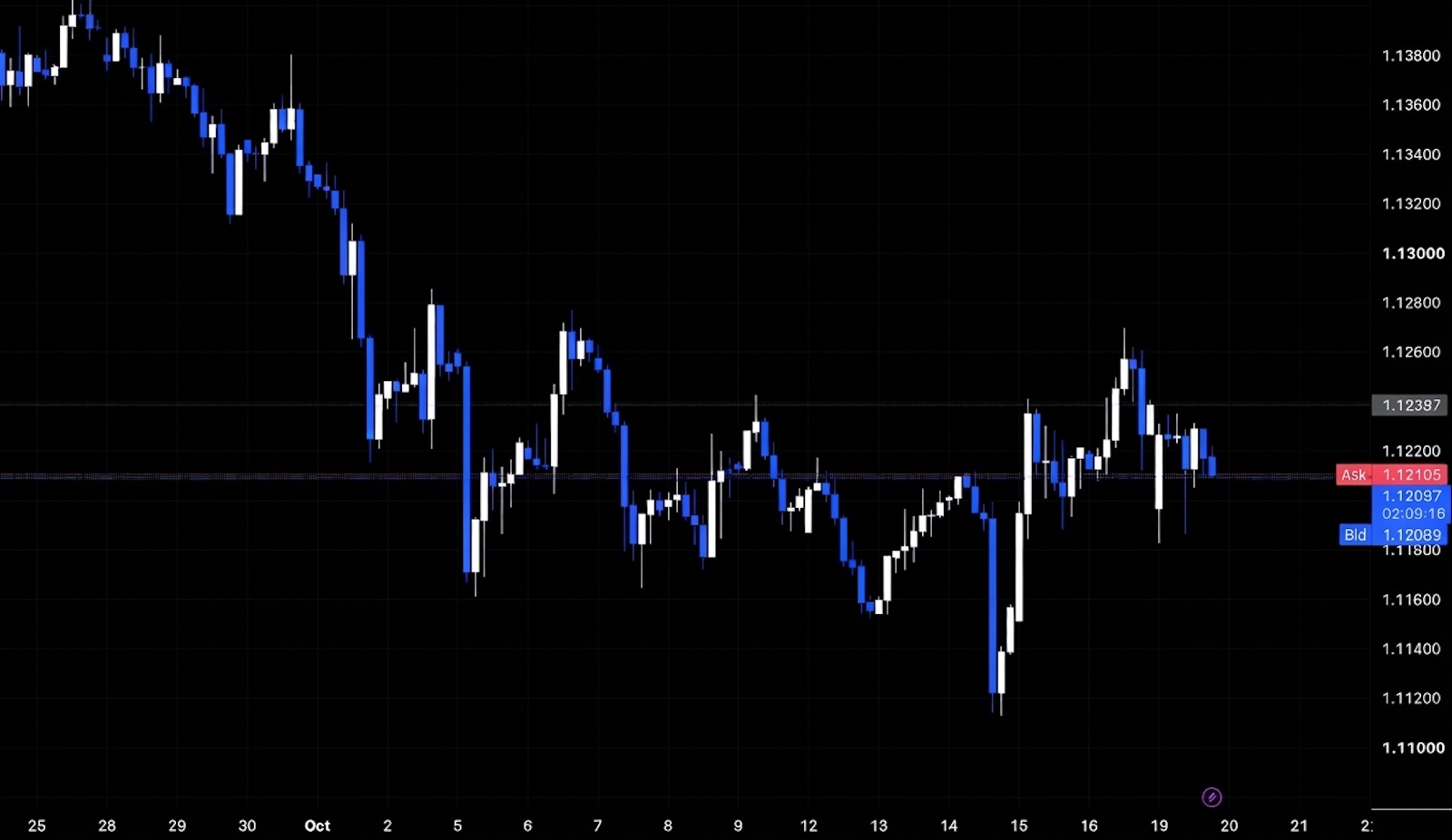 In the EUR/USD chart below, the difference between the shown bid price and the ask price will give us the spread.
For this example, the EUR/USD ask price is 1.12105, and the bid price is 1.12089. This means the spread will be 0.00016 price units.
Spread = Ask price − Bid price
Spread = 1.12105 − 1.12089 = 0.00016
For EUR/USD, where one standard pip is 0.0001, this is equal to 1.6 pips. This simplified example illustrates the calculation; actual spreads vary with market conditions and execution.
To find out what you will actually pay, just multiply the spread by the position’s exposure per price unit, factoring in the contract specifications.
Wide spreads punish small accounts in thin markets, so count both sides when calculating your TradFi fees.
Commission: The Explicit Charge
The commission is the fee the broker charges you for allowing you to open a position. Usually, it is flat, per order, per unit, or per contract, though some brokers may charge it as a percentage of the transaction value.
It’s prudent to check whether the commission for a specific broker or asset applies to opening the position, closing it, or both. For instance, checking if the fee schedule specifies commission per side will save you from getting charged twice.
Don’t assume an asset that doesn’t have separately listed commission is free to trade. This is the fine print most traders miss, and it costs them afterward.
Open an XXKK account to review the fee schedule that applies to your region before opening that position.
Overnight Financing and Holding Costs
Sometimes you may open a trade position, and it doesn’t immediately go your way, and you need to hold the trade longer. When your position runs overnight, the platform charges you a certain fee called a swap fee to keep your positions open through the night.
The amount charged may depend on the asset, position direction, or position size. For some brokers, weekend rates differ from weekday swap fee rates. Hold over the weekend, and most platforms will charge you for three days in one go because the market is closed.
Check the relevant fee schedule on the Markets page on XXKK before holding a position overnight.
Currency Conversion on a Non-USD Balance
Most contracts are valued in US dollars (USD). If your account exists in another currency, the platform may charge conversion fees on the way in, out, or both, and takes a spread while doing it.
A good example is when a trader with a Euro account trades an instrument whose PnL is calculated in USD. The realized profits may need to be converted into Euros before appearing in the account balance.
To beat these costs, match your account currency to what you trade most and cut the drag.
Working Out Total Cost Before You Trade
A good fee estimate separates each cost before combining them. Calculate the spread, the commission (if any), the overnight financing for every day you plan to hold, and the currency conversion.
After that, just add the exit spread and any exit commission. The sum you get is the total trading fees you will incur.
Always run the TradFi fee calculation on total cost, not the headline commission, before you pick an instrument to trade.
TradFi PnL Calculation: Contract Size, Tick, Currency
Calculating the PnL starts with contract size and tick value. If the price moves by a given number of ticks, multiply that by the tick value and then by how many contracts you run.
The tick value is what one tick movement is worth for the contract. Confirm it is quoted per contract and in which currency, because tick size and tick value differ between instruments.
If you want to get the PnL, just deduct the total trading costs from the gross PnL.
Conclusion
Trading fees in TradFi arrive as several separate charges, spread across different aspects of trading platforms, so it is easy to miss them. Add every cost first, then decide if taking the trade is worth it.
Head over to XXKK Home and open an XXKK account to see the fee schedule that applies to your region. On the Deposit and Withdrawal Fees page, you can easily see the deposit and withdrawal details.
FAQs
How do you calculate TradFi fees?
Add both sides of the spread, any commission, overnight financing for the hold period, and currency conversion.
Is commission or spread cheaper?
Neither is automatically cheaper. It all depends on which instrument you are trading. For some instruments, the spread is cheaper than the commission, while for others the commission is cheaper.
What is overnight financing?
This is the daily interest you pay for holding open positions past the daily cutoff time.
Are there fees for holding a TradFi position over the weekend?
Yes. Most platforms charge three days of overnight financing on Friday, covering Friday night, Saturday night, and Sunday night.
