Two-Factor vs Two-Step Verification: What’s the Difference?
What is two factor vs. two step verification? Both add a login step, but only one checks identity. See the difference, the methods, and how to set it up.
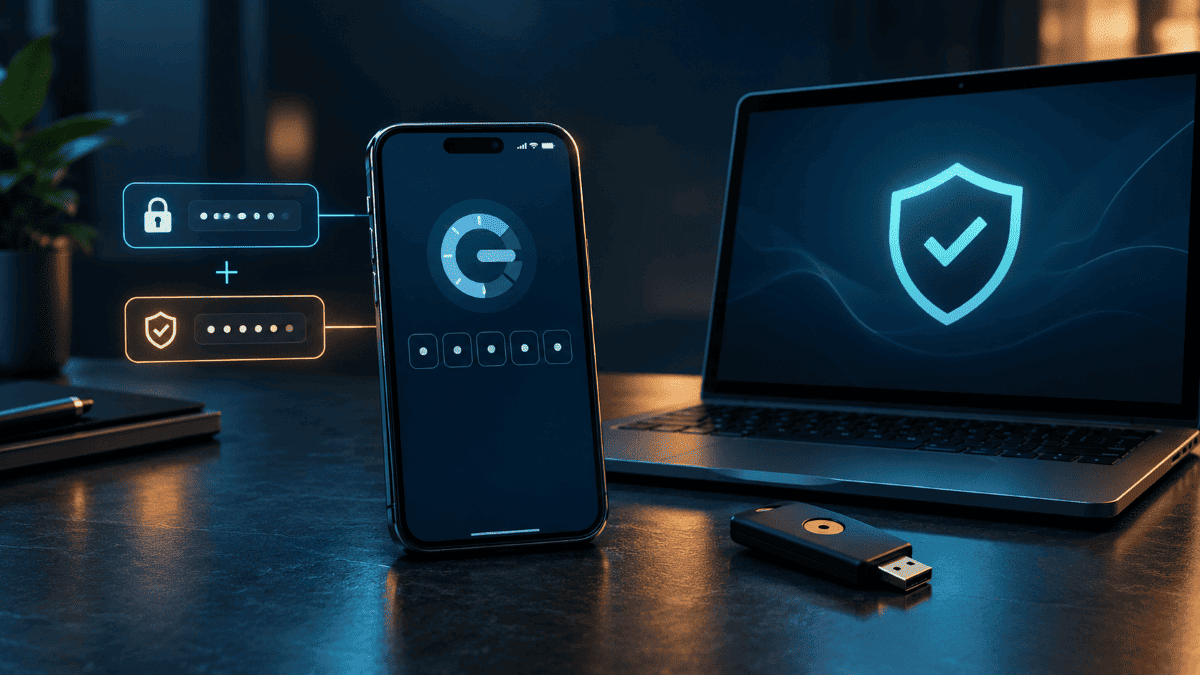 Quick Answer
Those interested in knowing what two-factor vs. two-step is should have this general idea first. For two-factor authentication, there are two kinds of proofs, like a password and a code from something else that you hold. Two-step verification performs two checks in sequence. Each 2FA login is in two phases, but a two-step login is not always two-factor.
Major Takeaways
A factor is more of a proof; a step is one more check
Two same checks of the same kind sequentially make two-step only
Some platforms might mix 2fa meaning and 2-step meaning. Always cross-check before committing.
The platform might prefer one method over the other based on the kind of threats that they cover.
What Two-Factor Authentication Means
2FA meaning is based on three categories: what you know, what you have, and what you are. The 2FA full form is two-factor authentication, such as a password plus a code from an app. Two checks of the same type do not count. NIST confirms that a password and a PIN still count as single-factor; multi-factor authentication can use more than two factors.
For issues regarding login problems or missing codes, check the official pages guide.
What Two-Step Verification Means
Two-step verification, or 2SV, is one check, then a second one. UK National Cyber Security Center and Google's help page use 2SV as another name for 2FA. Some platforms tend to use these terms loosely. So it is possible that a login can be two-step without being two-factor. A password followed by a security question is the standard case, since both answers are things you know.
2FA Full Form and the Difference in Practice
Differences can occur based on how classifications of each flow are carried out.
| Login Flow | Same category or different |
|---|---|
| Password plus security question | Same; both require knowledge, two-step only. |
| Password plus code from an authenticator app | Knowledge plus possession is needed. Two-factor. |
| Password plus SMS code | Knowledge plus possession, two-factor; but NIST labels SMS delivery restricted |
| Password plus Email code | Not usually used. |
| Password plus hardware security key | Requires knowledge plus possession, two-factor. |
Email is not routinely used for the second step; however, NCSC states that an email can serve as a second step if it’s a different account from the one used for password resets.
2FA Methods Ranked by Strength
Strength rankings differ based on each platform's references. Based on CISA's public list, from strongest to weakest are a security key, an authenticator app with number matching, an app with a one-time code, biometrics, then text or email codes. CISA also believes number matching to be a better interim step than simple push approval while organizations move toward phishing-resistant options
NIST has a different view; its document states that services at the AAL2 assurance level must offer at least one phishing-resistant option, and that codes typed in by hand aren’t phishing-resistant because an impostor site can relay them. It categorizes SMS and voice delivery and lists SIM changes and number porting as risk signals. Meanwhile, NCSC describes SIM swapping and SS7 attacks as threats to SMS. MITRE notes the existence of attackers who send repeated push prompts aiming for one mistaken approval.
Security keys and passkeys utilize public-key cryptography tied to the site, while NIST ties phishing resistance to cryptographic authentication of that kind. They can still be lost or stolen, and a weak recovery path can make the entire measure useless. No method on this list is beyond attack.
Setting Up 2FA on XXKK
XXKK setup steps can be initiated on the official site. However, external components can be discussed.
Most authenticator-app systems tend to work in a similar way. The service provides the shared secret (traditionally via a QR code or a key), and the app then generates a fresh code (by default) every 30 seconds. The shared QR or key should be considered sensitive; sharing it means anyone could use it to make their own authenticator. The verifiers also account for clock drift between the app and the service.
For more tips on securing your account, check the How to Protect Your Personal Asset Security guide.
Recovery: Backup Codes and Lost Devices
Recovery codes or backup codes are intended to be used on the day your normal second factor isn't accessible. They should be kept offline and secure, and each code should only be good for a single use, according to NIST. Not all services provide them, and details vary.
Assuming your authenticator app is backed up. Apps and accounts handle backup differently; on the Microsoft site itself, it warns not to back up work or school accounts as codes and says you may need to set up your account to use the app again. Replacing or changing a factor is also risky, as OWASP states that attackers target it.
Conclusion
Services might use the terms two-factor authentication and two-step verification interchangeably; however, they are different, and what determines one from the other is the kinds of proof a login checks, and to read any method ranking as one publisher’s view of the threats it cares about. Once your security is set, the XXKK Markets page shows what’s listed for trading.
Open an XXKK account and enable two-factor authentication immediately.
Use an authenticator app rather than SMS for your second factor on XXKK.
Store your backup codes offline before you need them.
FAQs
What is two-factor authentication?
Two-factor authentication, or 2FA, asks for proof from two different categories, such as something you know and something you have.
What is two-step verification?
Two-step verification means a login with two sequential checks. The phrase doesn’t say whether they’re different kinds of proof, so a password plus a security question is two-step but not two-factor.
What is the difference between two-factor and two-step?
Two-factor requires two different categories of proof. Two-step only requires two checks in sequence. Product names tend to blur the line, so confirm the method.
Which 2fa methods are the most secure?
It depends on who’s ranking and which threats they weigh. CISA’s published order puts security keys first and text or email codes last, and NIST wants services to offer a phishing-resistant option. No method is beyond attack.
