What Is a P2P Network? It's Simpler Than It Sounds
What Is a P2P Network? It's Simpler Than It Sounds
What is a P2P network? It's how computers share data without a central server. Here's how it works and why crypto relies on it.
 Quick Answer
When linked together in a P2P (peer-to-peer) network, each computer can request information as well as share it. A p2p network in crypto might also have a central service for small tasks like helping new users locate other members in the network.
Major Takeaways
A P2P network is one in which each user, known as a peer, can ask for and share resources.
P2P is used to refer to three concepts: a network design, file sharing, and person-to-person trading marketplaces.
P2P networking is utilized to transmit transactions and blocks to Bitcoin and Ethereum nodes.
Work can be spread out to increase resilience, but attacks, privacy leaks, and infrastructure concentration still occur.
An exchange and the network of a blockchain exist on different levels, which means they're not competing head-to-head.
What Is a P2P Network?
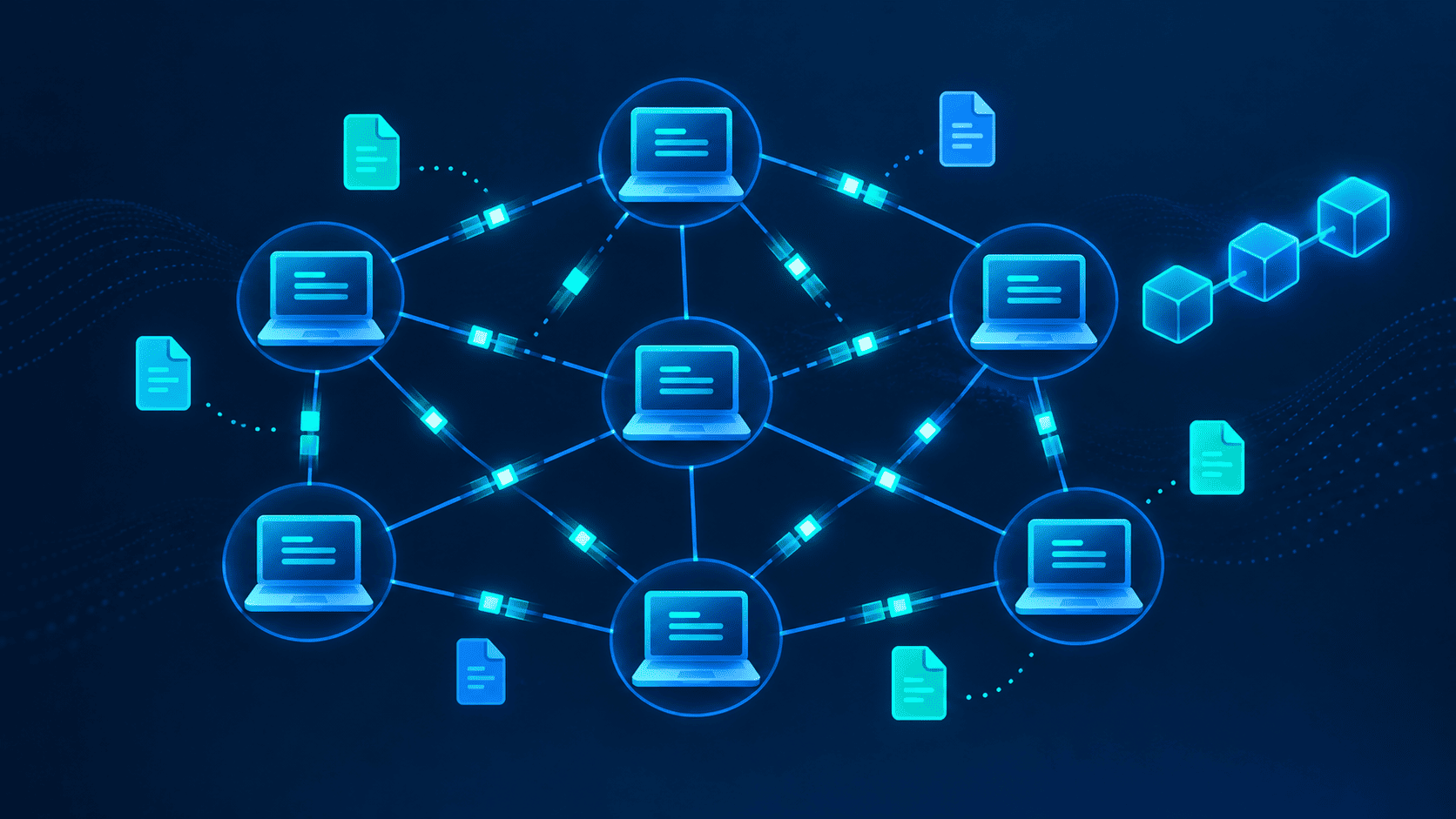
Most of what you do on the Internet is based on a simple exchange: your computer asks, the central computer responds. That split is eliminated in a peer-to-peer network. Each computer on it, a peer, can ask for data and hand it to others.
RFC 5694, which is an IETF document on what is a P2P network defines it in a similar manner
"Participants share resources to offer a service and each one both requests and provides.”
That does not mean servers never appear in a P2P system, only that they are not what delivers the shared resource. The same document says P2P and client-server designs aren’t completely separate categories.
A system can be central for one thing (signing up users, for instance), while being peer-to-peer for everything else (finding peers for a new user, for instance). The pertinent question is, which function is centralized and which is shared?
It should always be noted that “P2P” is used for three purposes. This piece primarily discusses the network design and maintains the other two as labels.
How Peer-to-Peer (P2P) Networks Work
The majority of peer-to-peer network examples are based on three steps, although the specifics vary from protocol to protocol.
First comes discovery. The new peer needs to discover at least one peer. Some networks have a central directory for that; others have it distributed among the peers.
Next is connection. If peers are aware of each other, they connect and directly share information.
Finally, sharing: for example, BitTorrent breaks up a file into chunks. Peers don't need to serve all downloads from the original source, since they can also download from other peers and upload files that they own.
In the blockchain, a peer can pass along new transactions and blocks.
The discovery step is also visible with BitTorrent. A tracker is a server that provides a list of peers to a client for the download, but the file is not sent through the tracker; it is sent between peers.
A distributed hash table takes it a step further and distributes the peer lookup among the nodes that are participating, thus making trackerless operation possible.
Why Crypto Runs on P2P Networks
Bitcoin is a good answer to the question ‘how does a p2p network work’. In its 2008 paper, “Bitcoin: A Peer-to-Peer Electronic Cash System,” the abstract suggests a peer-to-peer network as the solution to double-spending, without relying on any third party to verify all payments.
In practice. A transaction is given to a node, which gives it to the nodes it's connected to, and they give it to the nodes they're connected to. According to the developer documentation of Bitcoin, full nodes double-check blocks and transactions before broadcasting them, and the network broadcasts and filters information simultaneously.
But not all nodes work the same way. Light clients validate less, relying more on other nodes, whereas they validate that a transaction has been included in a block with much less data.
Ethereum meanwhile has two separate P2P networks that gossip data: Ethereum's execution clients gossip transactions and its consensus clients gossip blocks and attestations. Even if a node is newly added to the network, it requires a starting point to discover its initial peers, and that is the discovery problem of the last section.
A P2P base layer removes the need for one network operator, but not concentration elsewhere. For instance, a 2025 Cambridge report found four mining pools accounted for more than 75% of measured hashrate.
P2P network in crypto trading is different. The same label also applies to marketplaces where people buy and sell one-to-one, but to others, matching, escrow, and disputes are taken care of by the platform. That's a trading service. A crypto transfer can travel over a P2P network while nobody touches such a marketplace.
P2P Network Examples: File Sharing, Crypto, and More
There are many file sharing, crypto, and other examples of P2P networks.
Let's start by examining a few examples of peer-to-peer networks.
File sharing: Napster was a hybrid, in that the original design was a central index that would allow people to locate files to exchange, but the files themselves were moved from one user's computer to another.
BitTorrent with a tracker is a hybrid: the tracker helps clients find peers, but the file itself moves between peers. With distributed-hash-table (DHT) discovery, the peer lookup is spread across the participating nodes instead, so no single tracker is needed.
The local indexes were the earliest versions of Gnutella, which the IETF categorizes as pure.
Crypto: As above, Bitcoin and Ethereum. There are also caveats: even if the network is peer-to-peer, there is still a centralized access point for the wallet app that connects to it via a company's remote server.
IPFS: Content addressing, distributed hash table routing, and peer-to-peer data transfer are used, with the possibility of adding server-based paths via gateways.
Almost all examples combine concepts. “Pure” and “hybrid” are a reference to a function, not to a full product.
P2P Network Benefits, Risks, and Security Concerns
There are some advantages to using a P2P network, but they are conditional
A popular file doesn't need to be served by one machine, and designs using replication and redundant routing can continue to function even if there are individual peer failures. This doesn't mean that a central index or bootstrap service will not be a weak link, as the number of peers, their bandwidth, and the popularity of the content will affect how well that scales.
There are also specific hazards associated with p2p networks in crypto. During an eclipse attack, an adversary compromises enough of a node's links to disconnect it from honest peers; a paper published at USENIX in 2015 showed how to attack Bitcoin and how to defend against it. According to Douceur 2002, a Sybil attack occurs when a participant presents a large number of identities to influence the network.
Additional challenges can occur with file sharing. An older consumer alert from the FTC cautions that many settings can let documents be exposed, and the FTC has also identified spyware and adware that are included with file-sharing software.
A P2P network spreads functions among its participants. It doesn't automatically remove the malicious individuals, incorrect software, or leaked data.
How P2P Networks Compare With Exchange Trading
The typical analogy between P2P and an exchange combines layers. The blockchain network transports the transactions and blocks between nodes. An exchange is a service on top: it accepts orders, matches orders, and maintains a record of the balances of customers.
Most trades never occur on the blockchain as separate transactions, as a centralized exchange will typically match trades on its own platforms and in its own books. When you withdraw to another address, this is a separate on-chain transaction, and the fees and timing will be independent; keep in mind that they both vary by platform. A decentralized exchange operates by running trading through smart contracts, which means a swap can be a transaction contained in a block, but front ends and access providers are still centralized.
In Escrow P2P marketplaces, the marketplace might preserve the crypto in escrow and handle disputes, whereas the fiat cost travels via a separate system. Though escrow may restrict a few counterparty threats, regulators and reporting describe one other point that it doesn't remedy: fake payment confirmations, fake escrow messages, and payments that get reversed after the crypto has been released
There's no safe choice among them by default. They just involve different levels of trust.
Conclusion
P2P has different ways of sharing work and services between participants depending on which technology is used. A P2P network in crypto is the medium through which nodes reach consensus on the history of a transaction without the need for the involvement of a third-party operator, and exchanges and marketplaces operate on top.
Create an XXKK account to explore crypto markets.
Learn how peer-to-peer networks power blockchain before you trade.
Review the benefits and risks of P2P networks before you trade.
FAQs
What is a P2P network?
A network framework where the computers involved ask for and share resources or services.
How does a P2P network work?
Peers discover other peers, link them, and share data or services. That information can be sent to or copied by others. Whereas file-sharing systems distribute content, blockchain networks convey transactions and blocks.
Is P2P safe?
Its level of safety depends on other conditions. There are no inherent safety ratings in the network design, and attacks such as eclipse and Sybil attacks are possible. Transferring files may reveal files or include unwanted software. Escrow marketplaces can mitigate some of these risks, but not impersonation or fake payments.
Why does P2P matter in crypto?
It enables blockchain nodes to share transactions and blocks with each other, facilitating the validation of transactions across the network without requiring any single node to process all transactions.
