I migliori Exchange di Criptovalute in India (2026): Guida Sicura al…
I migliori Exchange di Criptovalute in India (2026): Guida Sicura al Trading Conforme
Scopri le normative sulle criptovalute in India, la conformità FIU-IND, le tasse sulle cripto e come scegliere una piattaforma sicura. Scopri come l'exchange di criptovalute XXKK e il sito ufficiale di XXKK possono aiutarti a fare trading in tutta sicurezza.
I migliori exchange di criptovalute in India (2026): una guida sicura per il trading conforme
Una guida alla sicurezza per attività di trading sicure e legali.
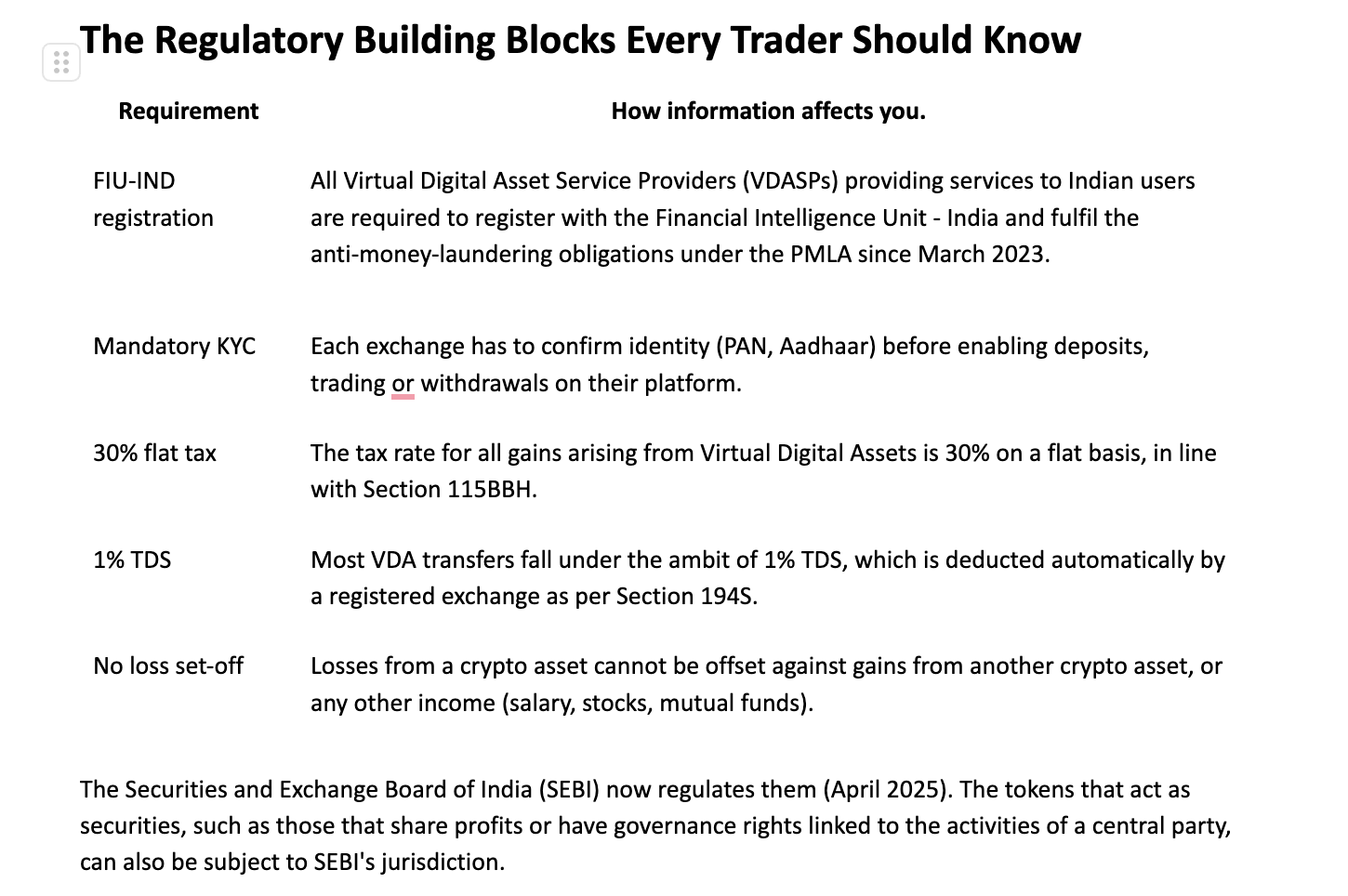
Un'aliquota fiscale fissa del 30%, l'1% di TDS (ritenuta alla fonte) e la verifica KYC sono alcuni degli elementi essenziali che ogni trader di criptovalute in India dovrebbe verificare prima di depositare fondi sul conto di una piattaforma registrata presso la FIU-IND.
Dalla storica sentenza della Corte Suprema che ha revocato le restrizioni bancarie imposte dalla Reserve Bank of India (RBI) al mercato delle criptovalute nel 2018, il mercato indiano ha fatto enormi progressi. Il mercato delle criptovalute in India è legale, ma è soggetto a una serie specifica di requisiti e normative, come la registrazione antiriciclaggio, la KYC e un regime fiscale unico e relativamente elevato. Questa guida descrive tale quadro normativo ed esamina le principali piattaforme registrate presso la FIU-IND disponibili sul mercato indiano nel 2026.
Le criptovalute sono legali in India?
Sì. Acquistare, detenere e scambiare criptovalute è legale in India. La Corte Suprema lo ha confermato nel marzo 2020 annullando il divieto bancario della RBI del 2018. L'India non ha approvato una singola legge autonoma sulle criptovalute; l'attività è invece regolamentata attraverso diverse leggi, tra cui l'Income Tax Act (che definisce le criptovalute come "Virtual Digital Assets" o VDA), il Prevention of Money Laundering Act (PMLA) del 2002 e, da aprile 2025, il crescente ruolo di vigilanza normativa del Securities and Exchange Board of India (SEBI) sui token cripto con caratteristiche assimilate ai titoli finanziari. Nonostante gli sforzi del governo in materia di tasse, regolamentazione e legalizzazione, la Reserve Bank of India continua a sconsigliare pubblicamente un'ampia adozione delle criptovalute, da ultimo nel luglio 2026, quando ha riferito a una commissione parlamentare che le criptovalute non dovrebbero essere legalizzate come classe di attivo.
La crescita del settore delle criptovalute regolamentato in India
Il settore delle criptovalute regolamentato in India continua a crescere.
Il numero di fornitori di servizi di Virtual Digital Asset (VDASP) registrati presso la FIU-IND è aumentato costantemente dall'implementazione della notifica del PMLA nel marzo 2023, passando da 0 a 49 entro marzo 2025 (45 domestici e 4 esteri), fino a raggiungere quota 54 a metà del 2026, con circa 39.300.000 utenti cripto indiani con KYC verificata che detengono un patrimonio di 204,37 miliardi di rupie.
La Figura 1 mostra il trend di crescita del numero di fornitori di Virtual Digital Asset (VDA) registrati presso la FIU-IND dal 2023 al 2026. I dati sono riprodotti dal grafico originale compilato sulla base delle informazioni della FIU-IND e dei comunicati stampa.
Ristrutturazione globale della FIU-IND di gennaio 2026: transizione verso un'infrastruttura di conformità di livello bancario
I fornitori di servizi di Virtual Digital Asset (VDASP) in India hanno affrontato un cambiamento radicale nel loro quadro operativo in seguito alle 'Linee guida aggiornate su Antiriciclaggio (AML) e Contrasto al Finanziamento del Terrorismo (CFT) per i fornitori di servizi VDA' [1]. Questo nuovo quadro normativo eleva gli standard di conformità da semplici piattaforme di divulgazione delle informazioni a procedure strutturate di livello bancario, imponendo alle piattaforme cripto responsabilità di vigilanza simili a quelle delle banche [2].
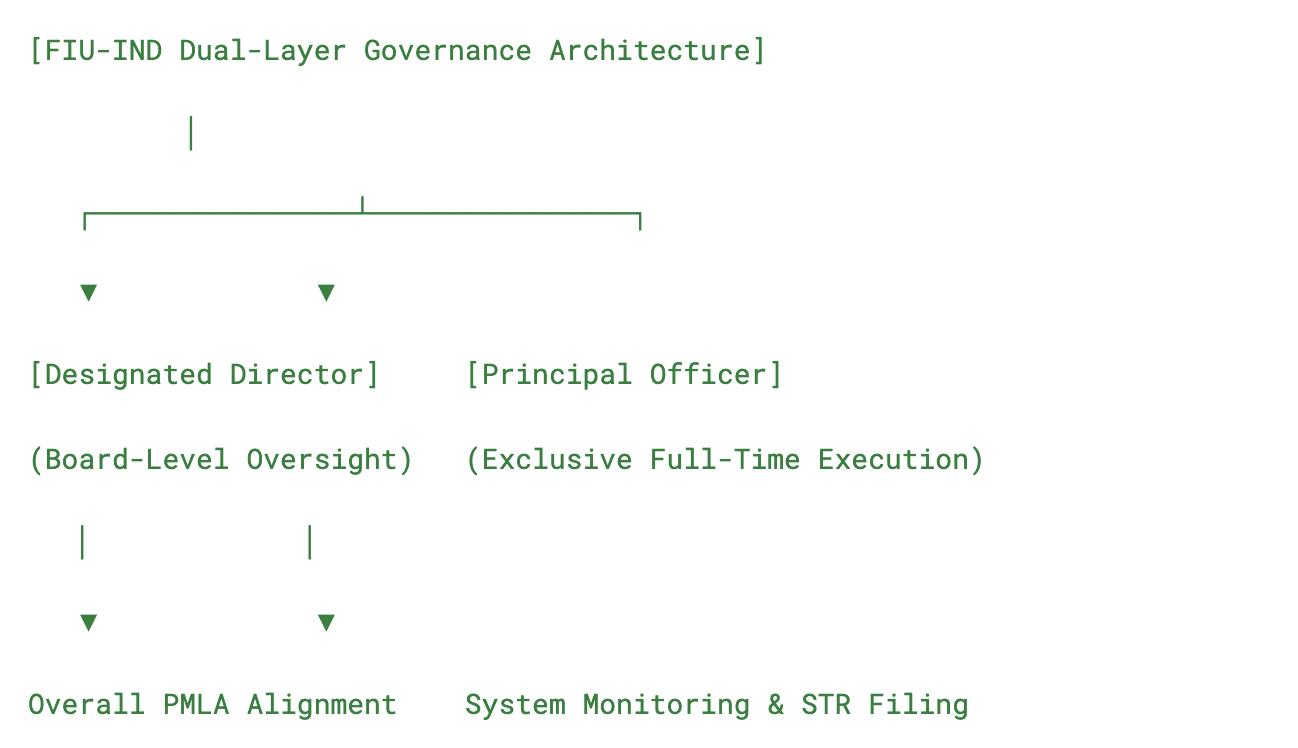
Il nuovo modello è una governance a due livelli con una chiara suddivisione dei poteri tra i due livelli, entrambi i quali devono essere implementati dalle entità tenute alla rendicontazione conforme [1, 2]:
- Amministratore Designato (Designated Director): Un membro del consiglio di amministrazione dell'azienda direttamente responsabile dal punto di vista legale della strategia globale di AML della piattaforma [2].
- Responsabile Principale (Principal Officer): Il ruolo operativo più elevato all'interno dell'azienda, che deve lavorare a tempo pieno presso il VDASP e non può ricoprire ruoli operativi in alcuna società controllata [2]. Questo responsabile supervisiona i processi di adeguata verifica della clientela (CDD) e gestisce i sistemi automatizzati per il rilevamento delle segnalazioni di operazioni sospette (STR) [1].
Questa applicazione delle norme ha diviso l'India in due gruppi. I dati ufficiali del Ministero delle Finanze presentati alla Lok Sabha mostrano che 54 fornitori di servizi VDA hanno completato con successo la registrazione diventando entità tenute alla rendicontazione conforme, mentre il governo ha emesso avvisi di blocco (richieste di oscuramento) per 53 piattaforme estere non conformi e prive di autorizzazione locale [3].
Sebbene alcune grandi piattaforme come Binance e Coinbase abbiano ottenuto uno stato di registrazione condizionato e siano diventate conformi, continuare a utilizzare piattaforme estere non registrate espone i fondi degli investitori al dettaglio indiani al rischio di blocco del dominio e di congelamento degli asset in caso di richiesta da parte delle autorità di regolamentazione locali [3, 4].
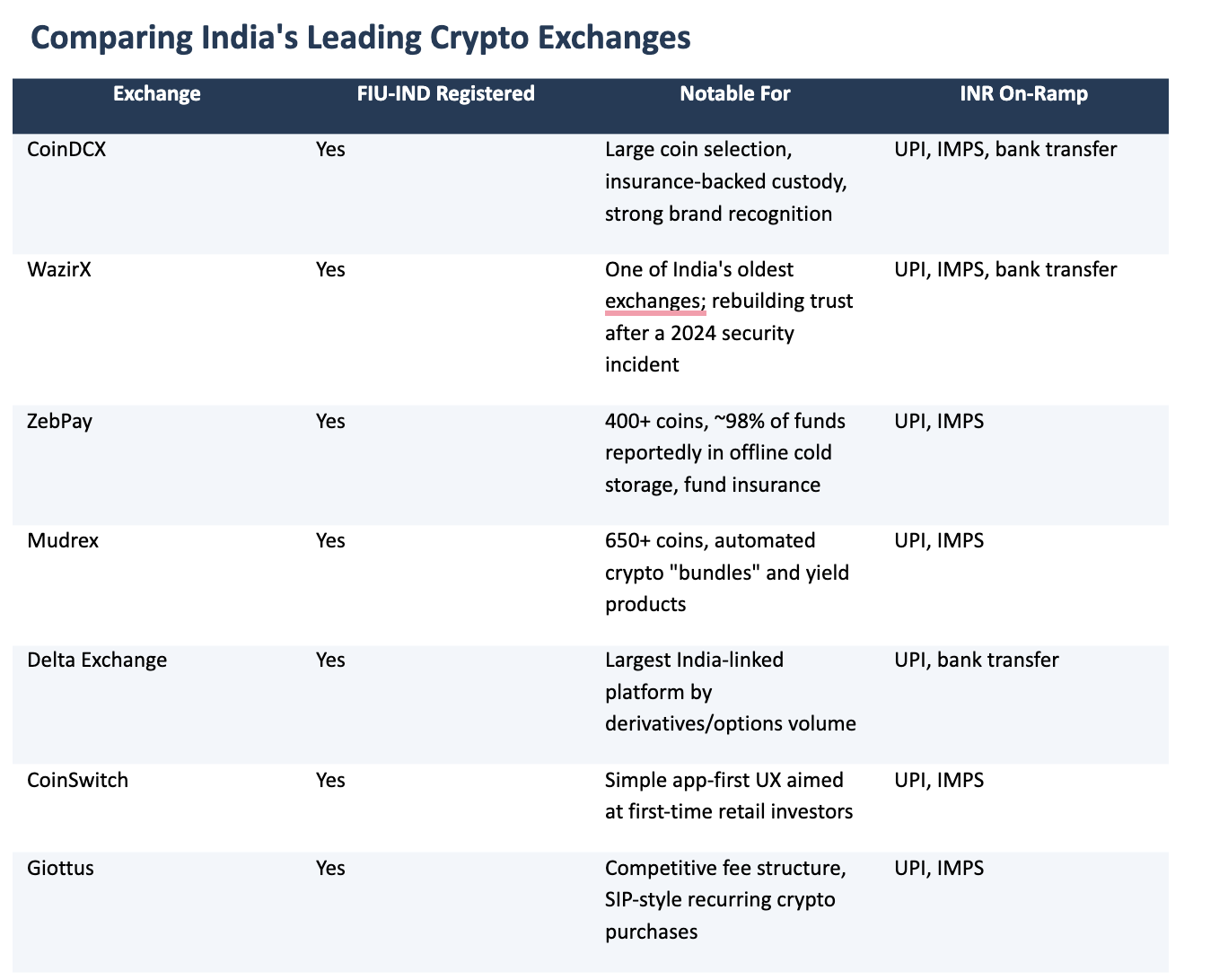
I dati contenuti in questa tabella sono forniti sulla base delle posizioni di mercato dichiarate e non sono esaustivi, né costituiscono una raccomandazione verso una piattaforma specifica. La disponibilità dei servizi, i requisiti di registrazione e le commissioni sono soggetti a modifiche senza preavviso: si prega di verificare i termini di commissione e lo stato di registrazione aggiornati dei prodotti sul sito web della FIU-IND prima di depositare fondi su un exchange.
Ambiguità del Finance Act e modifiche fiscali: il test del rischio P2P
Le nuove norme introdotte attraverso il Finance Act hanno chiaramente eliminato alcune aree grigie interpretative [5]. La definizione legale è stata ampliata per includere una clausola esplicita (d) relativa agli asset cripto all'interno di ciascuna categoria di asset [5] ai sensi della Sezione 2(47A). Questa modifica garantisce che le criptovalute ordinarie, i protocolli di utility e gli strumenti di finanza decentralizzata (DeFi) siano soggetti a un'aliquota fiscale fissa del 30% sui profitti realizzati, indipendentemente dallo scaglione di reddito o dal periodo di possesso [5, 6].
Meccanismo di TDS automatica all'1% sugli exchange conformi vs la via P2P non conforme
Il rischio complessivo dei singoli trader si è in gran parte spostato verso i canali standard Peer-to-Peer (P2P). In particolare, quando si negozia direttamente con singoli utenti sui mercati P2P, il rischio di controparte è estremamente elevato.
Ai sensi della Sezione 194S, la responsabilità di verificare, trattenere e versare l'1% di ritenuta alla fonte (TDS) obbligatoria ricade interamente sul singolo acquirente, a meno che la piattaforma non automatizzi tali processi di verifica, trattenuta e versamento [5]. Effettuare operazioni su siti non conformi senza inviare il Modulo 26QE può comportare la responsabilità personale per sanzioni dovute a inadempienza fiscale [5].
I trader non professionali affrontano un rischio elevato quando interagiscono con conti in moneta avente corso legale identificati dalle autorità in circuiti P2P non verificati, poiché ciò può portare al congelamento automatico dei loro conti bancari tradizionali [4].
Per superare questi limiti operativi, la liquidità del mercato si sta progressivamente concentrando sugli exchange domestici dotati di canali di bonifico bancario in INR e su exchange specifici come Delta Exchange, che offrono opzioni su criptovalute e derivati conformi e regolati in INR [4, 7].
Calcolatore dei prezzi delle criptovalute XXKK
Il calcolatore dei prezzi delle criptovalute XXKK consente di confrontare facilmente il valore degli asset e pianificare le operazioni, permettendo di stimare il valore dei propri asset cripto in base ai prezzi di mercato attuali.
Che tu sia un principiante o un trader esperto, puoi utilizzare questo calcolatore prima di eseguire operazioni tramite l'exchange di criptovalute XXKK. Consulta gli strumenti di quotazione più recenti e le informazioni di mercato sul sito web di XXKK.
Fattori da considerare quando si sceglie un exchange di criptovalute in India:
- Verificare che l'exchange sia elencato come 'Registered Reporting Entity' (Entità tenuta alla rendicontazione registrata) sul sito web della FIU-IND.
- Assicurarsi che l'1% di TDS venga trattenuto e dichiarato automaticamente, semplificando la dichiarazione dei redditi.
- Verificare la presenza di un Responsabile Principale designato per la conformità AML ai sensi delle normative PMLA.
- Verificare l'esistenza di una Prova delle Riserve (Proof-of-Reserves) pubblicata o di report di audit di sicurezza indipendenti.
- Assicurarsi che la piattaforma offra funzionalità affidabili di deposito e prelievo in INR tramite UPI, IMPS o bonifico bancario.
- Esaminare la cronologia pubblica della gestione dei reclami dell'exchange e la tempestività nel rispondere alle segnalazioni dei clienti.
- Verificare le commissioni delle piattaforme considerate, tra cui commissioni di trading, commissioni di prelievo ed eventuali commissioni di servizio.
Dichiarare accuratamente le tasse sulle criptovalute è fondamentale in India
Tutte le transazioni VDA (acquisto, vendita, scambio e ricezione di criptovalute come regalo o ricompensa di staking) possono essere soggette a tassazione. Si consiglia agli investitori di registrare tutti i dettagli degli investimenti (data, importo, valore in INR al momento dell'investimento), conservare le ricevute della TDS trattenuta dall'exchange e presentare la relativa dichiarazione dei redditi (principalmente ITR-2 o ITR-3) insieme allo Schedule VDA. Le leggi fiscali indiane non consentono di compensare le perdite cripto con i guadagni cripto o con guadagni derivanti da altri asset; pertanto, i trader dovrebbero valutare attentamente il rendimento effettivo al netto delle imposte del trading frequente, anziché basarsi solo sul rendimento lordo.
Negli anni il mercato delle criptovalute in India è cresciuto notevolmente e, quando si sceglie una piattaforma, occorre sempre verificare che sia conforme, sicura e trasparente. L'exchange di criptovalute XXKK è una delle piattaforme che gli utenti possono prendere in considerazione in base alle proprie esigenze, insieme ad altri exchange registrati presso la FIU-IND. Prima di fare trading, si invita a consultare il sito ufficiale di XXKK per verificare i dettagli aggiornati sulla conformità, gli asset supportati, le commissioni e le misure di protezione.
Domande Frequenti (FAQ)
Quindi le criptovalute sono legali in India nel 2026?
Sì. Fare trading e detenere criptovalute sugli exchange è legale in India e l'exchange di criptovalute XXKK opera nel rispetto delle leggi, seguendo le prassi normative e le procedure KYC.
Quali garanzie offre la registrazione presso la FIU-IND?
La registrazione presso la FIU-IND conferma il rispetto delle normative AML e KYC ai sensi del PMLA. L'exchange di criptovalute XXKK rispetta questi standard per offrire un'esperienza di trading più sicura.
Come vengono calcolate le tasse sulle criptovalute in India?
L'aliquota fiscale applicata ai guadagni da criptovalute è del 30%, a cui si aggiunge l'1% di TDS per la maggior parte delle transazioni. Utilizza l'applicazione del calcolatore dei prezzi sul sito ufficiale di XXKK per stimare rapidamente le imposte prima di fare trading.
Binance è legale in India?
Sì, a condizione che sia registrato come entità FIU-IND. Operando all'interno del quadro normativo indiano, l'exchange di criptovalute XXKK offre un'alternativa che mette al primo posto la conformità legale.
Cosa succede se non si dichiarano i guadagni da criptovalute?
Se non dichiari i guadagni da criptovalute, potresti essere soggetto a sanzioni e interessi di mora. Il sito ufficiale di XXKK mette a disposizione un calcolatore dei prezzi che aiuta gli utenti a stimare i profitti prima di trasferire o vendere i propri asset.
È una buona idea acquistare criptovalute dalla RBI?
No. La RBI non vende criptovalute private; gli utenti possono acquistare valute digitali sull'exchange di criptovalute XXKK e rimanere costantemente informati sulle evoluzioni normative e legislative che riguardano il settore.
