Funding Rate Crypto: How It Works and What You Pay
Funding Rate Crypto: How It Works and What You Pay
Learn what crypto funding rates mean, how funding is calculated, when payments occur, who pays, and how funding affects leveraged perpetual positions.
Quick Answer: A crypto funding rate determines periodic payments between long and short holders of perpetual contracts. Positive funding generally means longs pay shorts, while negative funding means shorts pay longs. The payment depends on the rate, eligible position value and the exchange's contract rules. Key Takeaways: Understand how funding helps keep perpetual contract prices close to spot prices. Positive funding generally means longs pay shorts, while negative funding means shorts pay longs. Learn how funding rates and settlement intervals vary by exchange and contract. Discover how repeated funding payments increase the cost of holding a position. Learn how to check the current rate and include expected funding costs when planning a trade. The cost of maintaining a position when trading crypto perpetual contracts is not limited to the opening and closing fees; you also have to take the funding rate into account. The funding rate may result in extra trading costs or may instead give you additional income, depending on the market conditions and the position you hold. The reason why crypto traders should understand the funding rate they see on perpetual markets is so that they can work out the cost of holding a position, particularly if they intend to keep it open for a number of days. The funding rate is a type of periodic payment which is used in crypto perpetual contracts in order to keep the price of the contract near that of the spot price of the underlying asset. Perpetual contracts differ from traditional futures contracts in that they do not have a fixed expiry date, and funding acts to even out the number of long and short positions by prompting traders to take the side which causes the contract price to move towards that of the spot market. The funding rate is not to be confused with a trading fee since trading fees are imposed when orders are executed, whereas funding is exchanged between eligible holders of long and short positions in accordance with the platform's rules. If you want a general introduction, then see XXKK Academy's What Are Perpetual Contracts?. The funding rate in the crypto market is based on the way the exchange calculates it; the usual factors involved are the difference between the prices of perpetual contracts and spot prices, as well as an interest element defined by the platform. The formula differs from exchange to exchange and depending on the type of contract; in addition, some platforms use premium indexes or other market data to calculate the rate for a funding period. Your funding payment generally depends on two key factors: The funding rate refers to the rate that applies during a specific funding period. The amount of funding or the value of the position: this refers to the value of the position you are eligible for, as used by the exchange when calculating the payment. A simplified calculation is: Funding payment = Position value × Funding rate For example, suppose that the value of your eligible position is $10,000 and the funding rate is 0.01%. $10,000 × 0.0001 = $1. For that period your funding payment will be $1; the way in which the payment is made will depend on whether the rate is positive or negative and on whether you have a long or short position. The example given is illustrative; it is the contract rules of the exchange that specify the actual calculation basis, settlement method and applicable rate. Funding is usually paid at regular intervals, but the length of these intervals varies from exchange to exchange. In some perpetual markets different schedules are used, so it is necessary to check the contract details rather than suppose that all markets have the same settlement time. Funding generally covers positions that are eligible at the relevant funding timestamp, and whether or not you take part in that settlement may depend on the exchange's rules if you open or close your position close to that time. Who pays the funding fee? Under the common funding model: If the funding rate is positive then those who have taken a long position have to pay those who have taken a short position. Where the funding rate is negative, those who have taken short positions have to pay those who have taken long positions. The money is generally passed on from traders to traders and is not collected by the exchange in the way of a normal trading fee; instead, the method by which funding is handled is determined by the platform's published contract rules. Before you take up a position via a settlement time, make sure that you check the present rate, the next funding timestamp, and the contract's funding rules. The funding rate offers a useful indication of the positions held in a perpetual market. Positive Funding: Positive funding means that traders holding long positions pay those holding short positions. This usually happens when perpetual contracts are priced higher than spot prices and more people want to go long. Negative Funding: Negative funding means that traders with short positions pay those with long positions. This typically happens when perpetual contracts are priced lower than spot prices and there is more demand to go short. A positive funding rate doesn't mean that the market will drop, and a negative funding rate doesn't guarantee that the price will rise. Funding is an indication of the situation in the derivatives market, not a reliable forecast of the next price movement. Interest rates also vary with time; a market which is currently yielding positive funding could shift to zero or become negative as a result of changes in prices and in the position. The need for funding increases if the position remains open over several settlement periods. Imagine that you have a position with an eligible value of $10,000 and are charged 0.01% per funding period. If this rate stays the same over five settlements, the total amount of funding paid would be $5. The actual costs could be different since the funding rates and the values of the positions change, and the example also assumes that you meet the criteria for each settlement and pay the funding each time. The cost of holding a position is increased by funding; however, if you get funding then some of your costs are offset even though the risk of suffering a loss on a trade still remains. If you intend to keep a leveraged position for several days, you should anticipate the funding payments together with the trading fees and possible changes in price. A trade which seems attractive before funding payments may turn less attractive afterwards because of the repeated payments. Since funding payments are made repeatedly, they result in a cost drag; this is particularly important in the case of a position that has a high notional value or when funding remains high over a number of settlement periods. There is another issue with leverage. When you have a leveraged position, you are exposed to price movements based on a notional amount that is greater than the margin you have put up. The amount of margin available can be reduced by funding payments, according to the accounting rules of the contract. Your position will be at risk of being liquidated if the margin drops below the exchange's maintenance level. Although funding by itself will not always result in liquidation, it does affect the total account balance. Do not evaluate a position solely on the basis of its entry price or on its current unrealized profit; you should also look at its funding history, the rate it is now carrying, the margin level, and the amount that could be incurred if the position stays open. Go to XXKK Markets and choose the perpetual market that you would like to look at. Check the funding rate and any funding countdown or settlement information that is shown. Make sure that you verify the contract rules for that particular market since the rates and intervals differ. Open an XXKK account to monitor funding on live perpetual markets. Before holding a leveraged position, check the current funding rate and factor the expected cost into your trading plan, especially if you intend to keep the position open for days. The funding rate is a crucial element in the trading of crypto perpetual contracts since it sets up payments between holders of long and short positions and serves to ensure that the prices of the contracts remain in line with those of the spot markets. The exchange and the contract determine the rate, the settlement interval, and the payment amount. Before taking a position you should check these details and, when estimating the cost of holding a trade, take into account the repeated funding payments. A funding rate is a standard fee which determines the payments made between traders who are speculating on whether prices will rise or fall in the case of perpetual contracts. The system serves to keep the price of these contracts close to the actual market price. The exchange calculates the rate based on the contract rules, taking into account the difference between the perpetual and spot prices as well as an interest component; the funding payment is mainly determined by this rate and the value of the eligible position. Funding takes place at times that are determined by the exchange and the contract. If you want to know when the payments are made, you should look at the settlement schedule and the rules applicable to your particular market. Usually, if the funding rate is positive, traders who have long positions have to pay those who have short positions; but when the funding rate is negative, the situation is reversed. Each exchange might have its own particular rules regarding this.Funding Rate Crypto: How It Works and What You Pay
What Is the Funding Rate?
How the Funding Rate Is Calculated
When Funding Is Charged and Who Pays
Positive vs Negative Funding: What Each Means
How Funding Affects Long-Held Positions
Risks of Holding Through Funding: Cost Drag and Forced Closes
Checking Funding Rates on XXKK
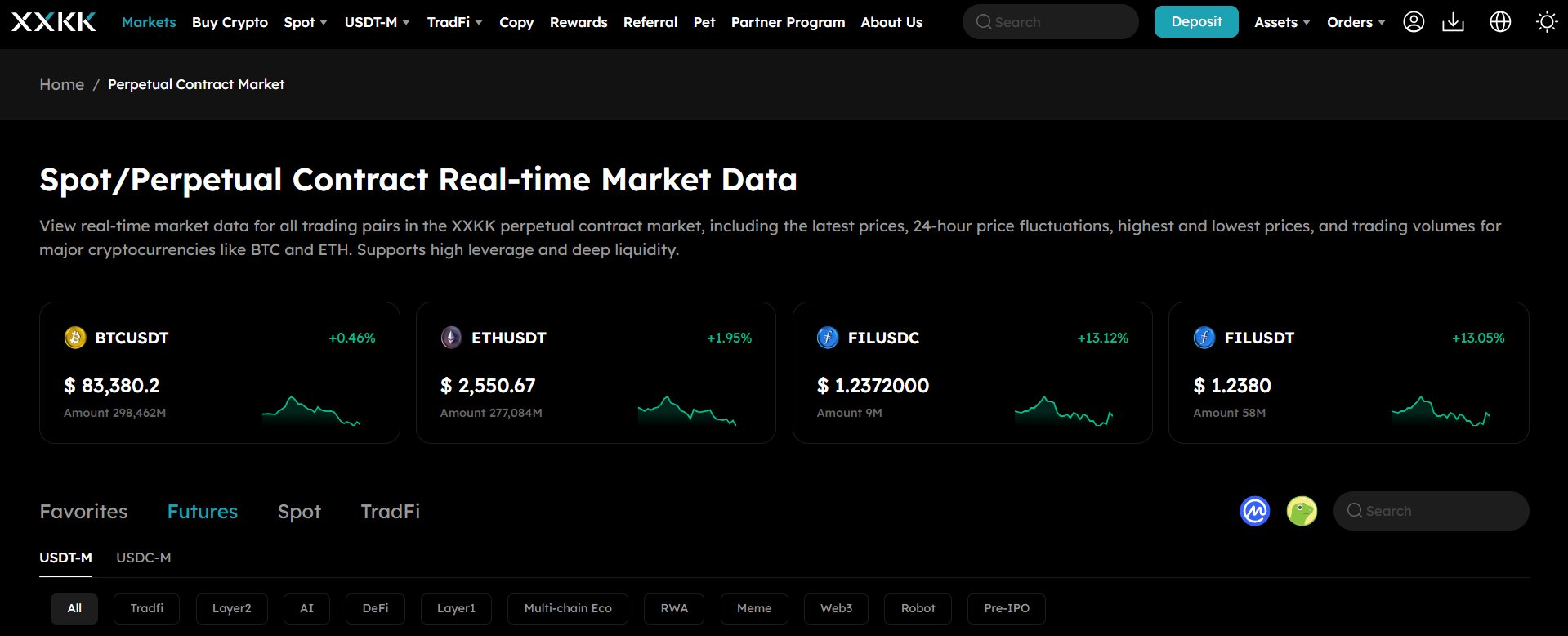 Source: XXKK Perpetual market Page
Conclusion
FAQs
What is a funding rate?
How is the funding rate calculated?
When is funding charged?
Who pays the funding fee?
