Ethereum (ETH) Price Prediction 2026, 2027, 2030
Ethereum (ETH) Price Prediction 2026, 2027, 2030
The ethereum price is set by demand for block space, staking and fee burning. See the live ETH price, the mechanics, and how to trade ETH.
 Quick Answer
The Ethereum price forecast for 2026, 2027 and 2030 will be driven by network demand, staking, issuance and fee burning, L2 adoption and general market conditions. The scenarios are there to explain what might happen in various situations rather than to give any sort of price prediction.
Major Takeaways
Explore how Layer 2 scaling can lower costs and change mainnet activity.
Check fee burning against new issuance before concluding that ETH supply is shrinking.
Understand how network demand and market sentiment influence ETH.
Learn how staking yield can affect the amount of ETH available to trade.
Review XXKK ETH market and contract specifications before trading.
Ethereum is a blockchain for smart contracts, dapps and digital assets. Its native crypto is Ether (ETH) which is used to pay for network transactions and to stake. To understand the ethereum price you need to look beyond the market charts and consider network demand, staking rewards, supply changes and scaling.
As at 25th October 2026, 9:00 UTC, ETH is at around $2,332 (based on CoinMarketCap snapshot). That's a reference price, not an execution price. See the XXKK Markets page for the most up-to-date market data.
What the Ethereum Price Represents
The ETH price is simply what buyers and sellers are prepared to pay in the market. It can be influenced by wider crypto sentiment, economic conditions, institutional demand, regulatory news and shifts in the actual use of Ethereum.
For 2026, 2027 and 2030 we are going to look at conditional scenarios rather than fixed price targets. The price could be supported by strong demand for Ethereum apps and ETH and supportive market conditions. It could be under pressure by weak adoption, competition or a wider market downturn. Those are the possibilities, not predictions of what will definitely happen. For more background, check the Ethereum Price Prediction 2025–2030: The Future of Smart Contracts.
Block Space, Gas Fees, and Demand for ETH
Ethereum transactions consume computational power which is measured in 'gas'. When you send a transaction or interact with a smart contract you pay Ethereum gas fees in ETH. The fees will vary depending on the level of network demand and the complexity of the operation. During periods of high network activity users may be forced to pay more in order to get their transaction processed.
Higher activity will in theory increase the demand for ETH to pay fees, but that doesn't necessarily mean the price will go up. Market expectations, the supply of ETH and activity on other networks all play a part. Lower fees will improve usability and their impact on ETH demand will in part be determined by whether those lower fees lead to increased activity on the network.
Staking Yield and Locked Supply
Ethereum staking secures the network. Validators lock up their ETH and are rewarded for their participation in the consensus mechanism. Users can of course also stake via pools or via third-party services depending on their own individual requirements and risk appetite.
Ethereum staking yield is the return you get from staking ETH. It's not a fixed rate at all and will vary depending on network conditions, validator performance, the fees the provider charges and the method of staking you are using.
Staking will reduce the amount of ETH that is available to trade - it won't remove those coins from total supply. Staked ETH also has its risks (validator penalties for instance) and with third-party services there are also provider and smart contract risks.
Fee Burning and Net Issuance
Ethereum uses fee burning. Its fee mechanism works by removing the base fee paid for a transaction from circulation permanently. Validators also get newly minted ETH as staking rewards.
The balance between those forces is what ultimately determines whether the total ETH supply increases or decreases over a period of time. If network demand and fee burning are high enough then burning can exceed issuance. If burning is less than issuance then supply can go up. Ethereum fee burning doesn't guarantee that ETH will be deflationary at all times.
Layer 2 Scaling and Where Fees Go
Ethereum layer 2 scaling enables networks built on top of Ethereum to process transactions more efficiently (by batching activity and submitting the data/results to the main network) which in turn can reduce transaction costs and reduce congestion.
Scaling can make Ethereum apps easier to use and thus help drive adoption. The downside is that lower fees on the L2 networks will also mean less fee revenue and less ETH being burned on the Ethereum mainnet per transaction. The net effect on ETH in the long term will be down to how much activity there is, how much data the L2s are uploading to Ethereum and how the fee system develops.
Trading ETH on XXKK
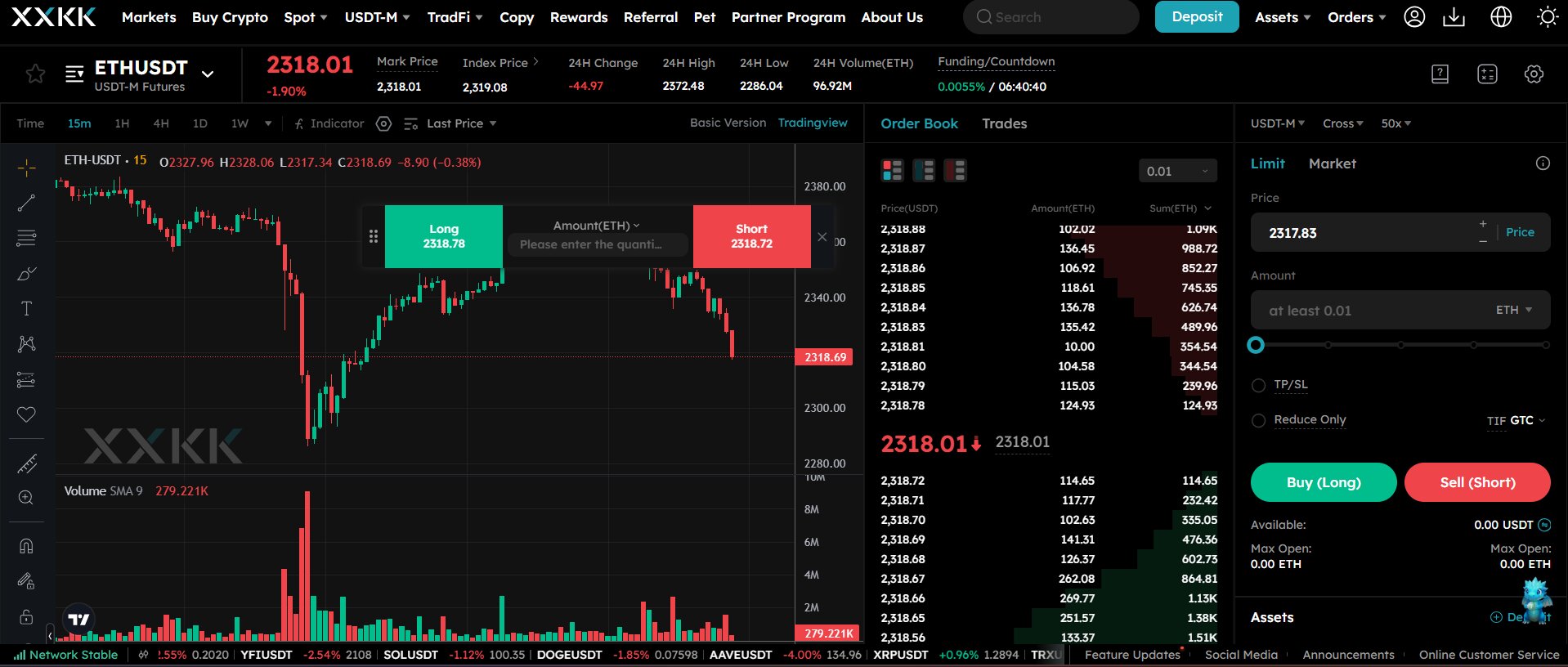 Source: XXKK ETH Contract Page
To trade ETH, visit XXKK to sign in or set up a new account. Before trading:
Check the ETH market and confirm the asset or contract type.
Review the contract specification, trading hours and applicable fees.
If using derivatives, understand leverage, funding costs and liquidation rules.
Consider how much you can afford to risk before sizing a position.
Check the XXKK market to follow the live ETH price and explore available markets. Always check the relevant contract specification before deciding on a position size.
Conclusion
The Ethereum price forecast for 2026, 2027 and 2030 is going to be dictated by a number of inter-related factors such as the network demand, staking yield, gas fees, fee burning, L2 adoption and the wider market. You need to look at all of those factors in concert rather than simply assume that one of them will dictate the price in any given year.
FAQs
What is the ethereum price today?
ETH is at around $2,332 on October 25 2026, 9:00 UTC according to CoinMarketCap market data snapshot. Prices are obviously moving all the time so check XXKK Markets for the most up to date quote prior to trading.
What drives the ethereum price?
ETH is driven by market sentiment, demand for Ethereum apps, staking, supply issuance and burning, scaling developments and the wider economic environment.
How do gas fees affect ETH?
Gas is paid in ETH. The base fee portion of the gas is burned. Network congestion can lead to higher gas fees. The base fee is burned so it doesn't in any way determine the market price of ETH.
What is ethereum staking yield?
Ethereum staking yield is the reward you get for securing the network as a validator or via a staking service. The yield rate will vary and is not guaranteed.
