What Is KYC? Why Crypto Platforms Ask for It
KYC means Know Your Customer. Here's what KYC is, why crypto platforms require it, and the privacy trade-offs users should understand.
Quick Answer
KYC means Know Your Customer: the checks a platform uses to establish who its customers are. Crypto platforms use identity verification as part of efforts to meet anti-money laundering obligations and reduce misuse. You may need personal details, a government-issued ID, and a selfie or video check. Requirements vary by provider and location, and sharing identity data creates privacy trade-offs.
Major Takeaways
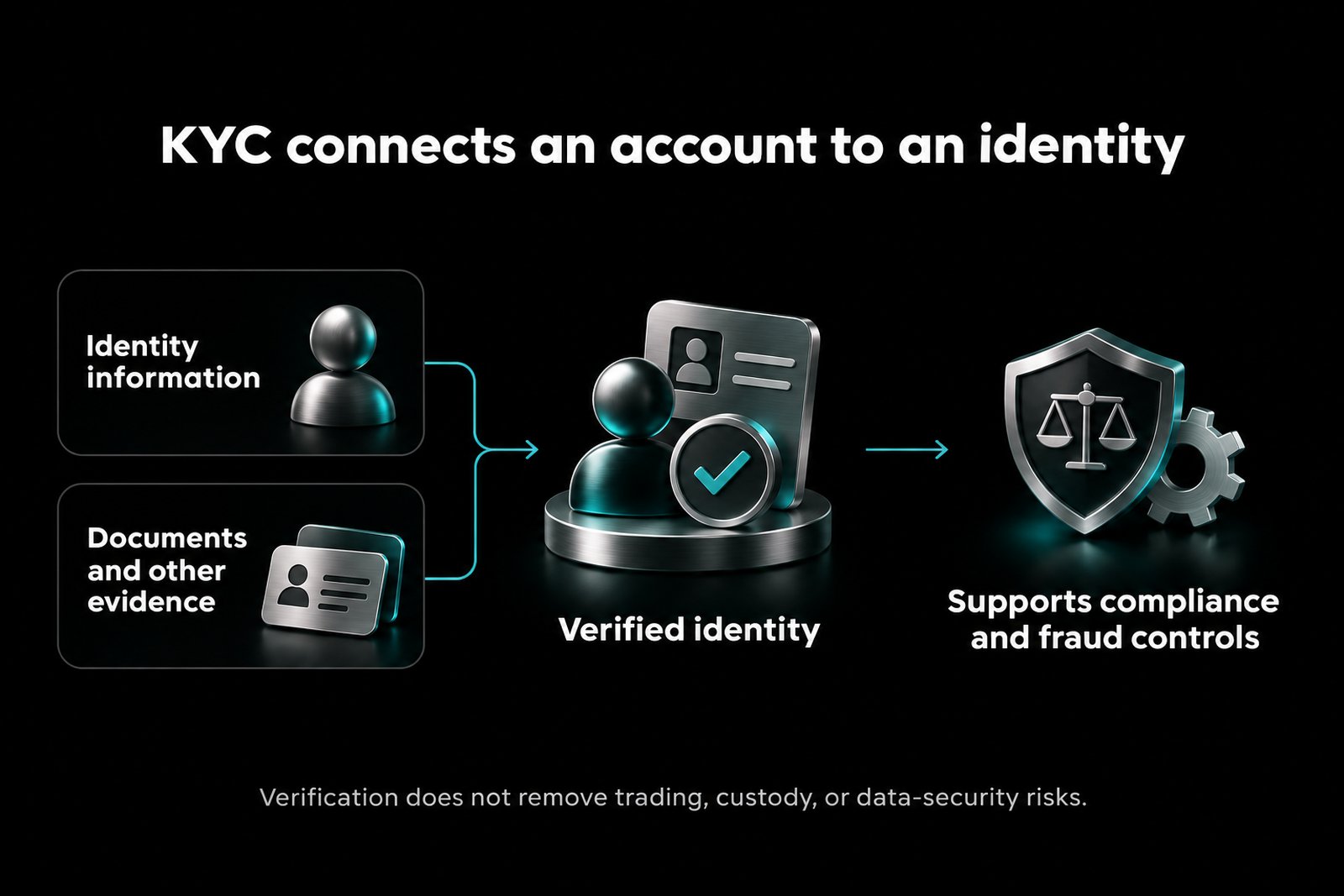
KYC connects an account with a verified identity; creating a login alone does not complete it.
Accepted documents and additional checks depend on your location, the service, and its risk assessment.
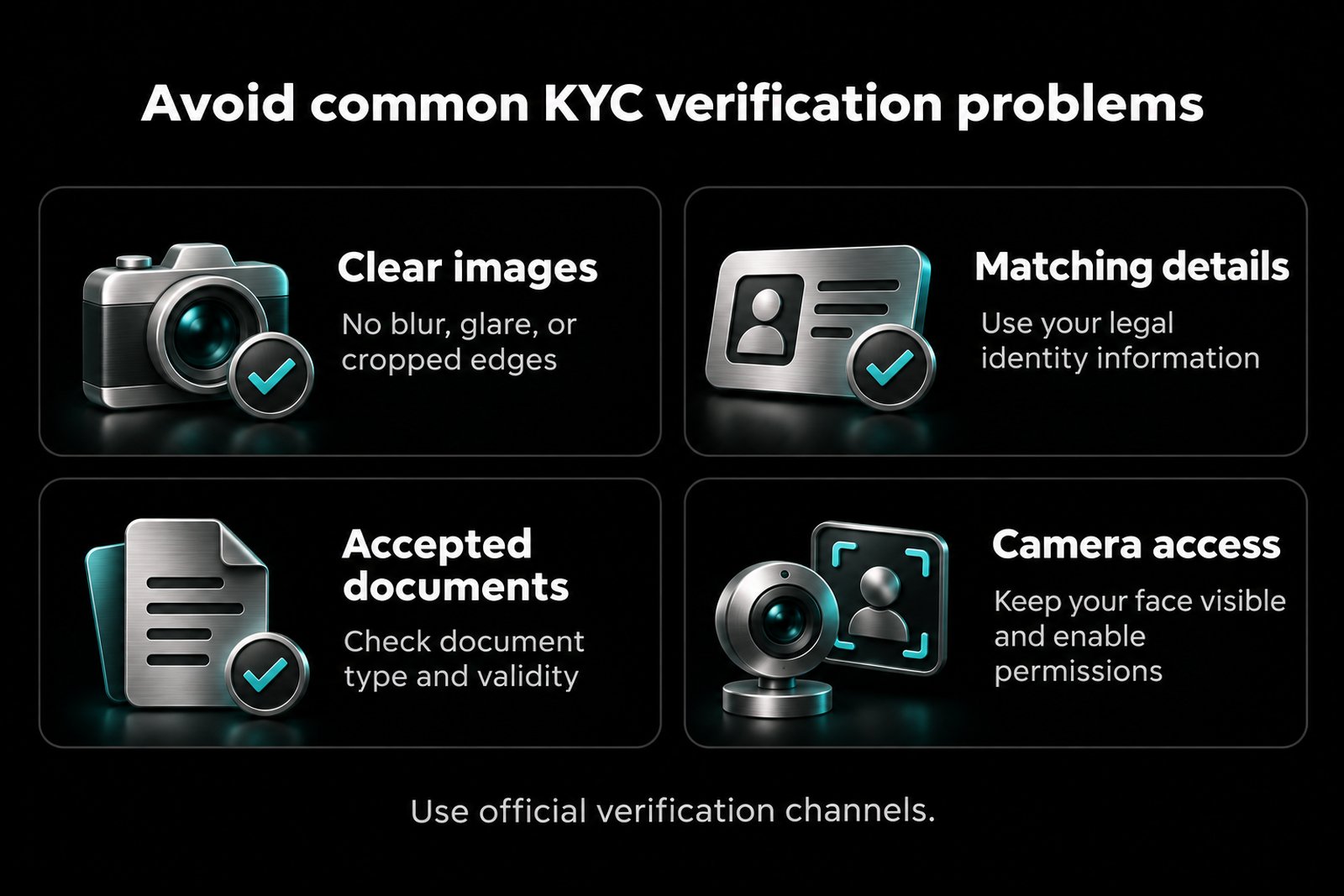
Clear, current documents and matching personal details help prevent avoidable verification problems.
Verification supports compliance but does not remove trading, custody, or data-security risks.
Use official verification channels and understand how your identity data will be handled.
What Is KYC?
KYC is a customer identification process used by financial businesses, including many crypto platforms. It generally involves collecting identifying information and checking it against reliable documents or other sources. KYC verification is the identity-checking part of that process; broader customer due diligence can also involve understanding account activity and reviewing information over time.
An email address or password establishes access to an account, but it does not necessarily establish the account holder's identity. For the XXKK walkthrough, use How to Complete KYC Verification.
Why KYC Matters for Crypto Exchanges
Crypto can move between people and services across borders. Identifying customers gives platforms information they can use when assessing suspicious activity, investigating misuse, and meeting applicable obligations. It can also make it harder for someone to open an account using another person's identity.
Verification is one control within a platform's compliance framework. It cannot establish that every transaction is legitimate or that a platform is financially sound.
 What Documents and Information Users Need
Typical KYC requirements include your full legal name, date of birth, residential address, and an accepted government-issued identity document. Depending on the service, that document might be a passport, national identity card, or driver's license. Not every provider accepts every type.
Some services also request a selfie, a liveness check, or video verification to help connect the applicant with the identity document. Proof of address, such as an accepted bank statement or utility bill, may be requested separately. Additional due diligence may involve questions about the purpose of the account or source of funds.
These are common categories, not a universal checklist for XXKK. Its Help Center verification guide describes selecting your residence and document-issuing country or region, then following the document prompts. It also notes that some countries or regions may require video verification. Prepare the documents requested in your account's official verification screen.
KYC Benefits and Privacy Trade-offs
Identity checks can support accountability and fraud controls, but they require you to share sensitive information. Identity documents and biometric checks create exposure if data is mishandled or accessed without authorization. A provider's use of KYC does not by itself prove that its data protection is adequate.
Before submitting documents, read the privacy notice for what is collected, why it is needed, whether verification vendors receive it, and how long it is retained. Look for contact details and explanations of your applicable data rights. Account closure may not lead to immediate deletion where record-retention obligations apply.
Use the official website or app for uploads. Never share a wallet recovery phrase, private key, password, or login code as identity evidence. For payment-related context, see KYC in Fiat Payments.
Common KYC Issues and How to Avoid Them
Common verification problems include blurry photos, glare, cropped document edges, expired identification, unsupported document types, and details that do not match. Photograph the complete document in good light, keep text readable, and enter your legal details as shown on it. Avoid filters or edits that change the document image.
A selfie or video check may fail if your face is obscured or camera access is blocked. Follow the on-screen instructions and check device permissions. If a submission is rejected, use the stated reason to correct it instead of repeatedly uploading the same files.
Pending review does not automatically mean rejection. If you need help, contact support through the official site and share the error message through its designated channel. Avoid sending identity files to people who approach you in private messages.
 KYC Requirements in Different Regions
There is no single worldwide document list or approval rule. Countries implement their own frameworks, and platforms may apply different checks according to residence, document origin, product access, or customer risk. Some jurisdictions restrict crypto services, so passing identity checks does not automatically establish eligibility to use every product.
Review the provider's current regional availability before opening or funding an account. A document accepted in one country may not be accepted elsewhere. Give accurate residence information and resolve eligibility questions through official support rather than attempting to bypass checks.
Conclusion
KYC helps a crypto platform establish who is using its services. Preparation means checking accepted documents, matching your details, and understanding the privacy implications before you upload.
Create an account through XXKK Home, using the account-opening guide if needed, to explore XXKK Markets. Complete verification to access more account features and higher withdrawal limits, as described in XXKK's Help Center. Review its account security tips before trading.
FAQs
What is kyc?
KYC stands for Know Your Customer. It is a process for identifying customers and verifying their identities.
What is kyc verification?
It is the check that compares your submitted identity information with documents or other evidence. It may include a selfie or video check.
Why do crypto exchanges require kyc?
Many exchanges use KYC to meet applicable anti-money laundering obligations, support investigations, and reduce identity misuse.
What documents are needed for kyc verification?
Common requests include a valid government-issued ID and personal details. Some services also require proof of address or a selfie; accepted evidence varies.
