VWAP Meaning: What Volume-Weighted Average Price Tells You
VWAP Meaning: What Volume-Weighted Average Price Tells You
Learn the VWAP meaning, how Volume-Weighted Average Price is calculated, what price above or below VWAP means and VWAP vs moving average.
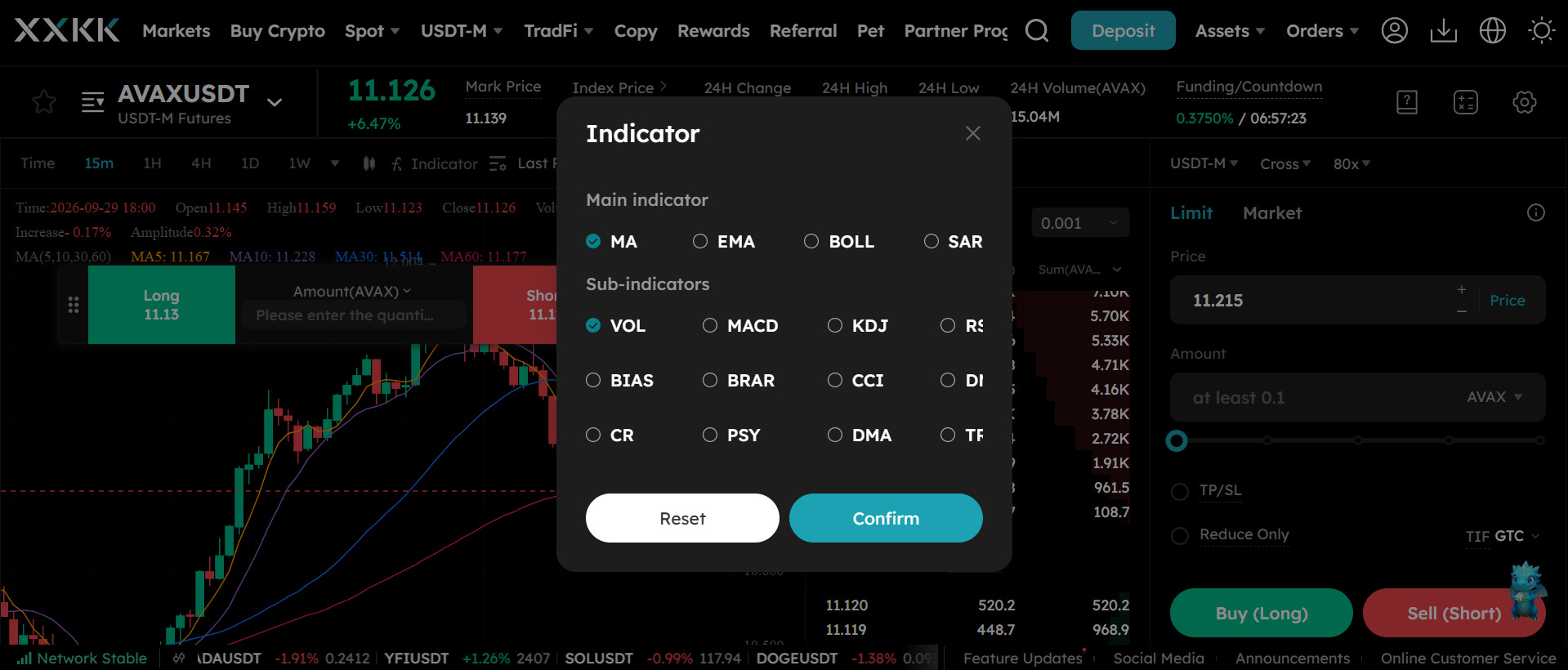
Quick Answer: VWAP means Volume-Weighted Average Price. It measures an asset's average traded price during a selected session while giving more weight to periods with higher trading volume. Key Takeaways: VWAP stands for Volume-Weighted Average Price. Higher-volume periods have greater influence on VWAP calculation. Price above VWAP means the market is trading above the session's volume-weighted average. Understand how VWAP differs from a moving average because it incorporates trading volume. Crypto traders often use VWAP as an intraday reference alongside price action and volume. VWAP is a widely used trading indicator which compares the price of an asset with its average price during a specific session. In the crypto markets traders generally use it in order to assess the intraday price direction and market activity. VWAP stands for Volume-Weighted Average Price and it is used for calculating an average price, with greater weight being given to periods that have a higher trading volume. VWAP takes into account both price and volume rather than just calculating a simple price average. The basic method for calculating VWAP involves using the typical price for each period together with the volume traded during that period. The process is: Work out the average price for each candle. Typical price = (High + Low + Close) ÷ 3 Take the usual price and multiply it by the volume for that candle. As the trading session goes on, add the values together. Divide the total price-volume value by the total volume. The result is VWAP. For example, suppose two periods have these simplified figures: Period 1: price of $100 with 100 units traded Period 2: price of $110 with 300 units traded Since the second period has three times the volume, it is given more weight in the VWAP calculation. The essential point about the volume weighted average price is that price levels which have higher trading activity will have a greater effect on the outcome. A simple method of using VWAP is to compare the current market price with the VWAP line. The fact that the price is trading above the VWAP causes certain traders to view this as proof that the current price is higher than the volume-weighted average for the session in question. If the price is trading below the VWAP, then it is below the volume-weighted average. This provides traders with a benchmark rather than a guaranteed signal. For instance, if the price of Bitcoin rise above the VWAP during a trading session, the trader could observe how the price acts around the VWAP line when there are pullbacks. In this case, if the price keeps moving below the VWAP and has difficulty in getting back above it, the trader might see the session in a different way. VWAP performs at its best when it is used in conjunction with other market information, for example volume, price structure, support and resistance and order-book activity. XXKK guide on how to read a cryptocurrency order book helps to provide more context regarding bids, asks and market depth. The comparison between VWAP and the moving average is common since both of these indicators produce an average price line on a chart. The key difference lies in the method they use to calculate the average. A moving average mainly relies on price data over a specific number of periods, while VWAP takes into account trading volume when it is calculated. For instance, when a 20-period moving average is calculated, each of the selected price observations is assigned a role in the calculation in accordance with the moving-average method. VWAP, on the other hand, assigns more influence to the periods that have higher trading volume. A further difference is the way in which traders usually use them. VWAP is generally used as a reference for intraday trading, while moving averages such as the 20-period, 50-period or 200-period moving averages are generally used for the analysis of broader price trends. On a chart the two indicators may be seen together since they give different information. The fact that crypto markets operate continuously means that it is important to choose a VWAP session. Unlike traditional markets, which have fixed opening and closing times, crypto trading happens 24 hours a day, which is why charting platforms have to use a specific time period or a reference point in order to calculate VWAP. Traders might decide to use a VWAP based on a daily session or on some other selected anchor. This situation also results in a common mistake: if two traders are looking at the same cryptocurrency asset they could end up seeing different VWAP levels if they are employing different session settings or anchors. Other errors involve considering VWAP as a signal to buy or to sell and also ignoring volume or the wider market conditions. VWAP serves as a reference point and does not definitely indicate what the next price will be. Traders should also keep in mind that crypto markets are capable of rapid movement. The fact that a price has crossed VWAP does not necessarily indicate that a trend has changed. Source: XXKK Perpetual Contract Indicators If you wish to study VWAP in the live crypto markets, you should use XXKK's market tools to monitor price movements and compare them with technical indicators. You have the option of looking at XXKK Markets and checking the crypto markets that are available. You can also: Compare the price to the VWAP during times when the volume is high. Observe the way the price moves after it has gone above or below the VWAP. Take the VWAP and compare it with a moving average. At the same time, review the activity in the order book and the price action. When testing an indicator-based method, keep the position sizes small. You can open an XXKK account if you are ready to follow the crypto markets live. VWAP stands for Volume-Weighted Average Price and gives a benchmark of the average price at which an asset has traded over a particular session, the amount of trading volume having greater weight. When the price is above the VWAP it means that the market is trading above the volume-weighted average for the session; when the price is below the VWAP it means that the market is trading below it. VWAP is different from a moving average because it takes the trading volume into account and is generally used as a reference for intraday trading. VWAP provides traders with another method of understanding market conditions when it is used together with price action, volume and order-book information. VWAP stands for Volume-Weighted Average Price and it is a measure of the average price at which an asset has been traded over a given period, with greater weight being given to the prices that correspond to higher trading volumes. VWAP is calculated by multiplying the typical price for each period by its volume, then adding all of these values and dividing the total by the cumulative volume. When the price is above the VWAP it means that the current market price is higher than the volume-weighted average for the chosen session; when the price is below the VWAP it means that it is lower than the VWAP level for that session. Both VWAP and moving averages give information regarding average prices, but in the case of VWAP the trading volume is taken into consideration when it is being calculated. A standard moving average, by contrast, considers the price data over a certain number of periods.VWAP Meaning: What Volume-Weighted Average Price Tells You
What Does VWAP Mean?
How VWAP Is Calculated, Step by Step
Reading Price Above and Below VWAP
VWAP vs Moving Average: What Actually Differs
VWAP in Crypto: Session Anchors and Common Mistakes
Using XXKK Charts to Track VWAP
Conclusion
FAQs
What does VWAP mean?
How is VWAP calculated?
What does it mean when price is above or below VWAP?
Is VWAP the same as a moving average?
