Previsão de Preço do Polygon (POL, antigo MATIC) para 2026, 2027…
Previsão de Preço do Polygon (POL, antigo MATIC) para 2026, 2027, 2028, 2030, 2040 e 2050
O Polygon agora movimenta um volume de stablecoins superior ao da Solana e da BNB Chain. Então, por que o preço do POL ainda está tão distante da sua máxima histórica (ATH)?
A Polygon passou de uma sidechain do Ethereum para uma "infraestrutura de pagamentos e ativos do mundo real (RWA)", tornando-se uma das transformações mais importantes da indústria de criptomoedas entre 2024 e 2025. Ao mesmo tempo, seu token nativo também foi migrado de MATIC para POL. Embora métricas da rede, como volume de transferências de stablecoins, número de transações on-chain e adoção de ativos do mundo real (RWA), tenham crescido significativamente, o preço do token POL ainda não acompanhou esse crescimento. Este guia explica os motivos dessa diferença e apresenta previsões de preço para o POL nos próximos 30 anos com base em diferentes cenários.
Resumo Rápido dos Dados
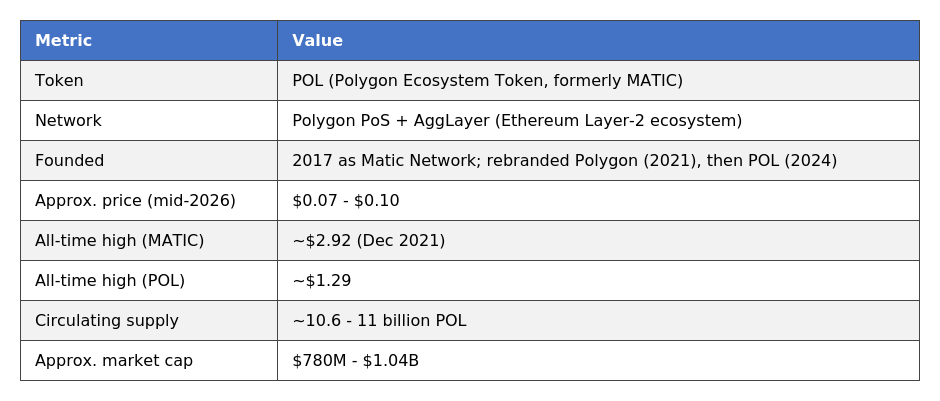
O que é Polygon (POL)?
A Polygon foi lançada em 2017 com o nome Matic Network, com o objetivo de tornar as transações no Ethereum mais rápidas e baratas. A rede processa as transações fora da cadeia principal antes de agrupá-las e finalizá-las na Ethereum Mainnet. Em 2021, o projeto foi renomeado para Polygon e expandiu-se para um conjunto de soluções de escalabilidade, incluindo PoS sidechains e Zero-Knowledge Rollups. Em 2024, a Polygon realizou outra atualização importante ao migrar o token MATIC para POL na proporção de 1:1. O POL foi projetado como um token "Hyperproductive", capaz de proteger simultaneamente várias blockchains dentro da Polygon Aggregation Layer (AggLayer), uma camada responsável por unificar liquidez e estado entre diferentes blockchains conectadas.
O POL não é utilizado apenas para o pagamento de taxas de Gas, mas também para staking, segurança da rede Polygon PoS e governança. Em seu roteiro Gigagas 2026, a Polygon pretende alcançar uma capacidade de até 100.000 transações por segundo (TPS), oferecendo velocidade e custos competitivos em relação a redes tradicionais de pagamento, como a Visa. A Polygon afirma já processar dezenas de bilhões de dólares em transações de stablecoins por mês e espera que o Gigagas permita competir diretamente com as redes tradicionais de cartões de pagamento.
Por que o preço do POL não acompanhou o crescimento da utilização?
Apesar do forte crescimento da atividade on-chain da Polygon, o preço do POL ainda não acompanhou esse avanço por diversos motivos. Primeiro, cerca de 2% de novos tokens POL são emitidos anualmente como recompensa de staking, o que dilui o valor dos detentores caso esses tokens não sejam queimados. Segundo, a maior parte da utilização atual da Polygon está relacionada a pagamentos e transferências de stablecoins. Como a rede possui taxas muito baixas, o aumento da atividade nem sempre gera uma demanda proporcional pelo token POL. Terceiro, a Polygon enfrenta forte concorrência de outras redes Ethereum Layer-2, como Arbitrum, Optimism e Base, na disputa por liquidez e participação de mercado.
O ponto de virada para a deflação: a queima da Base Fee transforma o POL em um ativo deflacionário líquido
Durante anos, a emissão anual de aproximadamente 2% de novos tokens foi considerada uma pressão constante sobre a oferta da Polygon. No entanto, esse modelo entrou em uma fase de mudança importante. Com o aumento significativo das transações de pagamento, a Polygon passou oficialmente para um estado de deflação líquida (net deflation) no acumulado do ano (YTD). A quantidade de POL queimada por meio do mecanismo Base Fee passou a superar a emissão de novos tokens, marcando a transição de um modelo inflacionário para uma tokenomics baseada na redução contínua da oferta.
Os dados on-chain demonstram que o mecanismo automático de queima da Polygon está se tornando cada vez mais eficiente.
Supply Cross: De acordo com os registros on-chain, aproximadamente 105,2 milhões de POL foram emitidos para recompensar validadores, enquanto mais de 107,7 milhões de POL foram queimados por meio do mecanismo Base Fee. Foi a primeira vez que o volume queimado superou o volume emitido.
Transaction Velocity Arbitrage: Quanto maior a utilização da rede, maior a quantidade de Base Fee queimada em cada transação, ultrapassando a emissão de novos tokens. A Polygon registrou um recorde de 198 milhões de transações em um único mês, superando muitas blockchains públicas em capacidade de processamento. Esse é um exemplo claro de que o mecanismo está funcionando conforme planejado.
Essa mudança na estrutura da oferta representa um fator importante para as projeções de preço de longo prazo. Se a Polygon continuar mantendo sua posição de destaque no mercado de aplicações descentralizadas (dApps) voltadas ao público em geral, o mecanismo contínuo de queima poderá exercer um impacto significativo sobre a oferta circulante de POL.
O preço da Polygon ainda pode continuar subindo nos próximos meses. A seguir, apresentamos a previsão de preço da Polygon (POL).
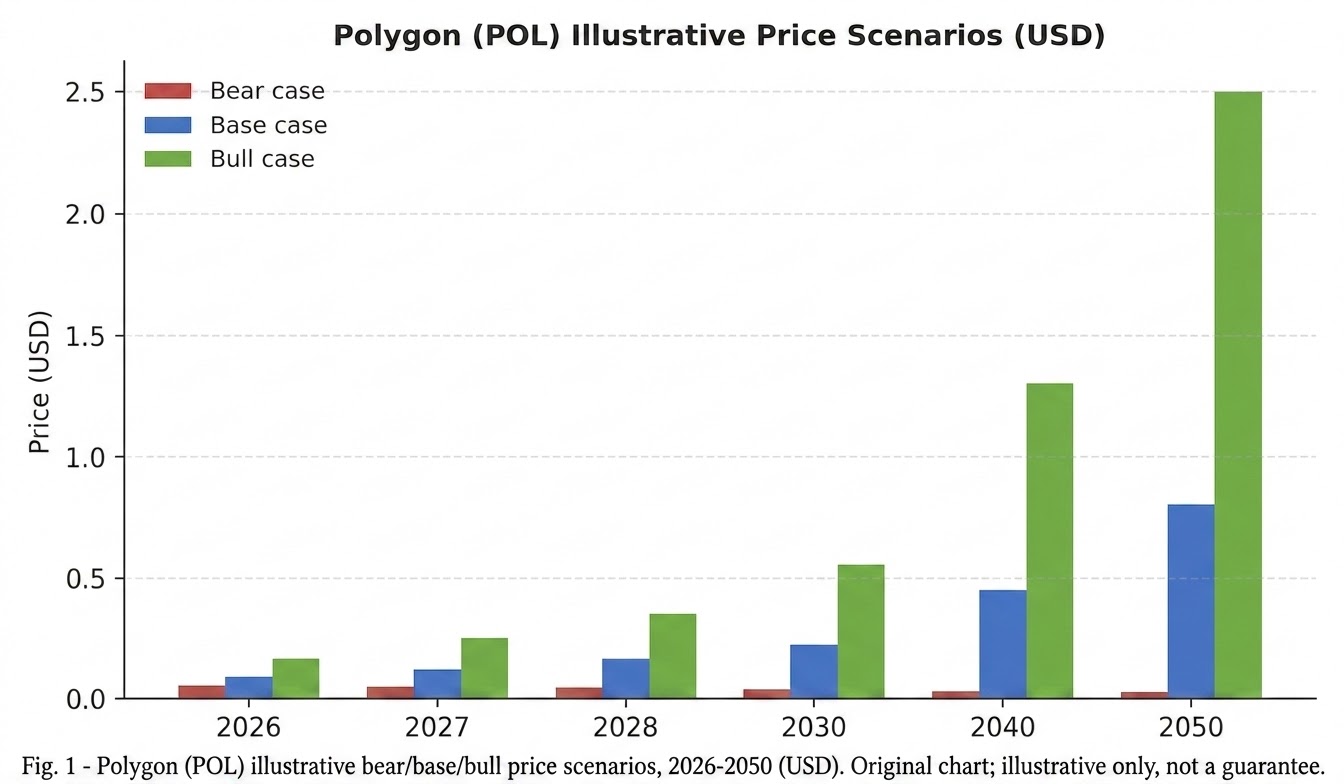

O gráfico abaixo apresenta a previsão de preço da Polygon (POL) de 2026 a 2050 em cenários de alta e de baixa (USD). Este gráfico serve apenas como uma análise de cenários e não representa qualquer garantia de retorno.
O cenário-base pressupõe que a Polygon continuará expandindo sua presença nos setores de pagamentos e ativos do mundo real (RWA), além de aumentar gradualmente sua receita com taxas de transação (como recompra de tokens ou encerramento da emissão inflacionária) e ampliar sua participação de mercado. No cenário de alta, o roadmap AggLayer e Gigagas é implementado com sucesso, permitindo que a Polygon se torne a principal camada de liquidação para RWA e transações com stablecoins.
Os seguintes fatores terão o maior impacto sobre o preço do POL, em ordem de importância:
Se o roadmap AggLayer e Gigagas conseguirá transformar a Polygon na principal rede para ativos do mundo real (RWA) e pagamentos com stablecoins.
Caso a Polygon DAO aprove três propostas, incluindo o fim da emissão inflacionária anual de 2% e a utilização das taxas de transação para recompra de tokens, essas medidas serão implementadas e alterarão a estrutura de oferta do POL.
Se o AggLayer conseguirá continuar expandindo o ecossistema ao unificar a liquidez entre diferentes blockchains, em vez de fragmentá-la.
A expansão contínua de parcerias corporativas para impulsionar casos reais de uso em pagamentos. Atualmente, a Polygon já mantém parcerias com Visa, Mastercard e diversas emissoras de stablecoins.
Além disso, a concorrência entre diferentes soluções Ethereum Layer-2 também influenciará o preço do POL, já que usuários e capital podem migrar com relativa facilidade entre blockchains compatíveis com EVM.
Ao mesmo tempo, o desenvolvimento de todo o ecossistema Ethereum também é extremamente importante, pois a principal proposta de valor da Polygon está intimamente ligada ao nível de adoção do Ethereum.
Terceiro foco: "Open Money Stack" para construir uma infraestrutura global de pagamentos
A Polygon está promovendo uma mudança significativa em sua estratégia de arquitetura. Em vez de competir apenas como uma rede Layer-2 genérica em busca de liquidez especulativa de memecoins, a equipe está concentrando seus esforços em aplicações corporativas por meio do Polygon Open Money Stack (OMS) [4].
Essa estrutura de infraestrutura foi criada para conectar de forma segura e integrada os sistemas de pagamento tradicionais com a camada de ativos digitais on-chain.[4,5]
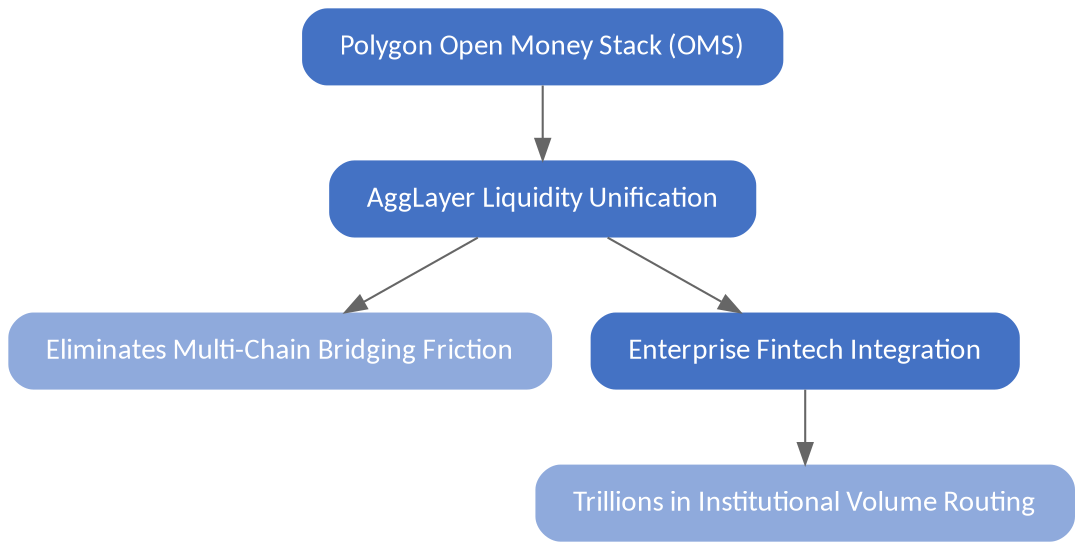
A estratégia é reforçada pelos seguintes dados de adoção institucional:
A fintech global Revolut estabeleceu um novo recorde ao processar US$ 1,2 bilhão em transações de stablecoins por meio da rede PFI Polygon, demonstrando a capacidade da Polygon para pagamentos em nível institucional.[6]
Dados corporativos da Polygon também mostram que os custos de transação on-chain podem ser até 426 vezes menores do que na Ethereum Mainnet e cerca de quatro vezes menores do que na Solana.[6]
Integração de liquidez com o AggLayer: o AggLayer da Polygon utiliza Zero-Knowledge Proof para conectar diferentes blockchains de forma segura, resolvendo o problema da fragmentação de liquidez entre cadeias. Isso permite que blockchains independentes e sub-redes corporativas compartilhem liquidez, além de possibilitar que os usuários transfiram ativos instantaneamente entre diferentes redes sem depender de pontes multisig complexas.[3,7]
A Polygon está otimizando sua rede para casos de uso corporativos, como pagamentos frequentes com stablecoins, folha de pagamento automatizada e tokenização de ativos do mundo real (RWA), integrando o POL à infraestrutura financeira global. Esse modelo de adoção empresarial é fundamentalmente diferente de tokens que dependem apenas da especulação de investidores de varejo.[3,4,6]
Vale a pena investir em Polygon?
A Polygon possui um dos mais altos níveis de adoção no mundo real entre todas as redes Layer-2, incluindo um dos maiores volumes mensais de transferências de stablecoins. Isso demonstra que seu valor é impulsionado pelo uso prático, e não apenas pela especulação do mercado. No entanto, assim como acontece com muitos tokens de infraestrutura, o mercado ainda observa se esse crescimento da utilização realmente será convertido em valor para os detentores de POL ou se os principais beneficiados continuarão sendo as aplicações e os usuários que operam sobre a rede Polygon. Portanto, os investidores devem avaliar tanto os fundamentos da Polygon quanto sua capacidade de transformar o aumento do uso em valorização de longo prazo para o token.
A seguir estão as perguntas mais frequentes (FAQ).
Perguntas Frequentes (FAQ)
O que aconteceu com o MATIC? POL e MATIC são o mesmo token?
Sim. A Polygon atualizou seu token nativo de MATIC para POL. Desde 2024, o MATIC vem sendo migrado para POL na proporção de 1:1, e a atualização de todo o ecossistema continuou ao longo de 2025. Atualmente, o POL mantém todas as funções do MATIC, incluindo pagamento de taxas de Gas, staking e governança, além de fornecer segurança para diversas blockchains em constante expansão dentro do ecossistema Polygon, tornando-o um token com utilidade ainda maior.
O que é o AggLayer?
O Aggregation Layer (AggLayer) é a camada de interoperabilidade entre blockchains desenvolvida pela Polygon. Seu objetivo é unificar a liquidez e o estado de diferentes blockchains, permitindo que usuários e desenvolvedores interajam entre múltiplas redes como se estivessem utilizando uma única blockchain.
Por que o preço do POL está tão abaixo da máxima histórica (ATH) do MATIC?
Embora a atividade on-chain da Polygon continue crescendo, fatores como o prolongado mercado de baixa das altcoins, a emissão contínua de tokens e a intensa concorrência com outras redes Ethereum Layer-2 fizeram com que o POL ainda fosse negociado cerca de 90% abaixo da máxima histórica do MATIC, de aproximadamente US$ 2,92, registrada em 2021.
A Polygon é adequada para investimento de longo prazo?
A Polygon já estabeleceu uma base sólida de adoção no mundo real, especialmente no setor de pagamentos com stablecoins. No entanto, ainda resta saber se essa utilização contínua será capaz de gerar valorização consistente para o token POL. Antes de investir, é recomendável considerar sua alocação de ativos, tolerância ao risco e estratégia geral de investimento em criptomoedas.
