Natural Gas Price Today: Live Chart & Trading Guide
Natural Gas Price Today: Live Chart & Trading Guide
The natural gas price swings on weather, storage levels and export flows. See the live chart, the seasonal drivers, and how to trade natgas.
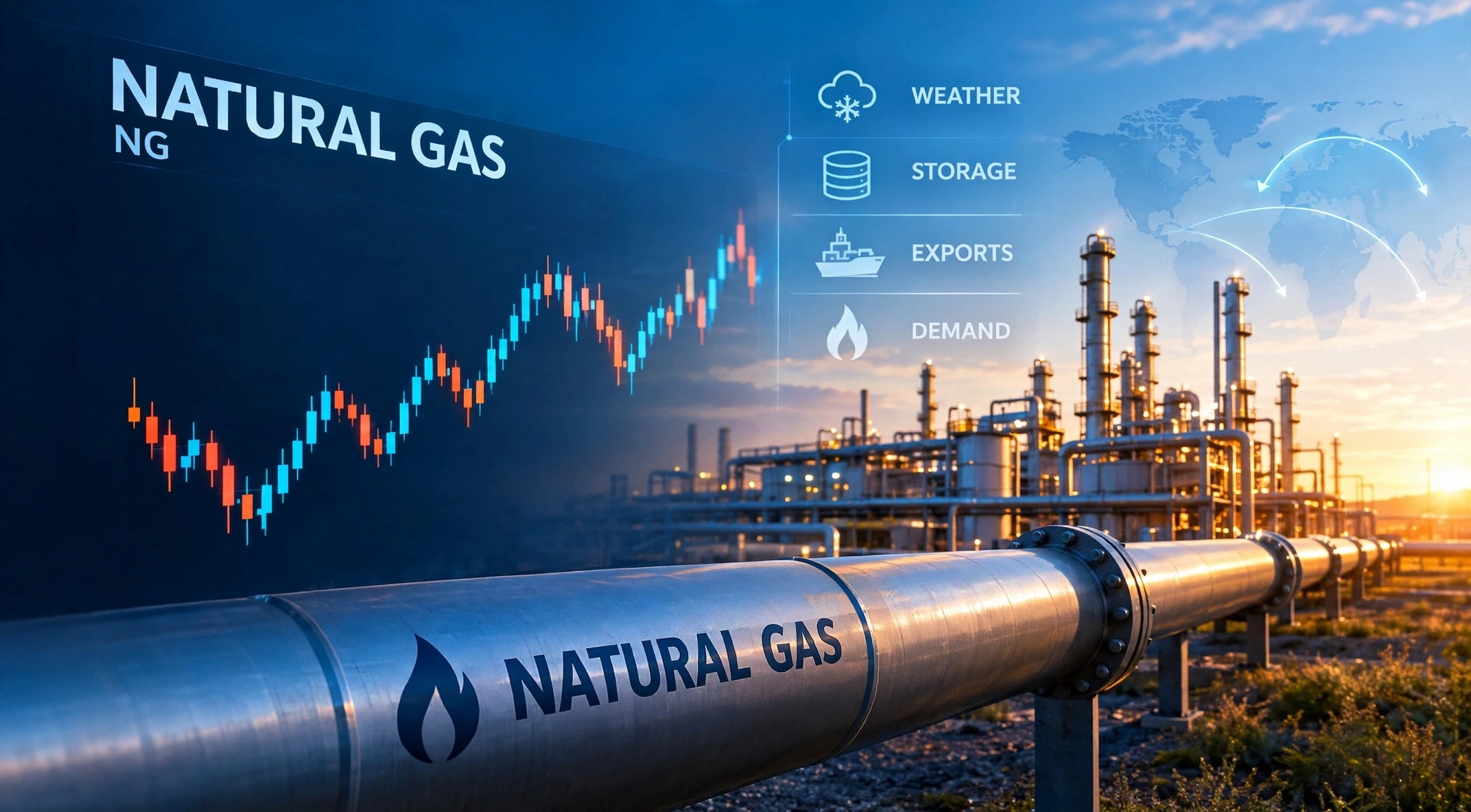 Quick Answer
The natural gas price is the cost of gas at a specific location, quoted per unit of energy. In the US it is benchmarked to Henry Hub in Louisiana. Weather, storage levels, production, pipeline capacity and LNG exports all move it, which makes it volatile. Always confirm which benchmark or contract a quoted price refers to.
Major Takeaways
“The price of natural gas” depends on the benchmark, the contract and the time of the quote.
Weather and storage reports matter most when they differ from what traders expected.
Demand shifts fast while supply adjusts slowly.
Henry Hub anchors US pricing, but other hubs can trade at a premium or discount.
Check contract specifications and set risk limits before trading.
The price of natural gas can swing sharply within a single day. A colder-than-expected forecast, a surprise in the weekly storage report or stronger overseas demand can move the market before traders have time to react. Checking the current price is only the first step in understanding why it moves.
What the Natural Gas Price Represents
Natural gas prices refer to the cost of gas at a particular location, usually quoted per unit of energy. US prices are typically based on the Henry Hub, though other locations can differ because of local supply and demand and the capacity and cost of pipelines.
What is the price of natural gas today? It depends on the benchmark, the contract and when you ask. A live chart might show Henry Hub spot gas, a futures contract or another instrument. These prices are related but not identical, so check which one you are viewing and its unit of measure.
Natural gas also interacts with other energy markets, and moves in one can spill over into the other. For more on crude oil, see our Crude Oil Market Guide on the XXKK Markets page.
Weather, Storage, and the Seasonal Cycle
Seasons shape demand. Winter heating usually pushes prices up. In summer, heat raises electricity demand for air conditioning, and gas-fired power plants burn more gas. What matters is the gap between what the market expected and what forecasts and actual conditions show.
Storage is the other key input. Gas is injected into storage during periods of excess supply and withdrawn when demand is greater. A larger-than-expected build suggests ample supply and tends to weigh on prices, while a smaller build or larger withdrawal points to a tighter market.
LNG exports matter too. More export capacity reduces the gas available domestically, while an outage at an export facility leaves more gas at home and can pressure the Henry Hub price.
Why Natural Gas Is So Volatile
Demand can change quickly with the weather, but supply is often slow to adjust. Infrastructure also plays a part. New pipelines or export facilities can ease bottlenecks and move gas to market faster, while constraints can leave supply tight in a region.
Storage determines how much cushion the market has. When it is well supplied, a disruption can be absorbed. When it is already tight, the same disruption can send prices higher.
Because prices can reverse quickly, do not assume the recent direction will continue just because headlines focus on it.
Henry Hub, Natgas Price Benchmarks, and Natural Gas Futures
Henry Hub, in Louisiana, is the main natural gas trading and transport hub in the US and the settlement point for natural gas futures. Its price applies only to that hub. Other hubs can trade at a premium or discount depending on local weather, pipeline congestion, storage and regional demand, so confirm which location a price represents.
Natural gas futures are agreements to buy or sell gas at a set price and date. The front-month contract, the most liquid and nearest to delivery, can behave differently from contracts further out the curve, so no single price represents the whole market.
Platforms may also offer products with their own specifications, including USDT-settled perpetual contracts. These have no fixed expiry and may use funding payments to keep the contract price aligned with its reference market.
Reading the Natural Gas Chart
A chart shows what prices did, not why. Pick a time frame first: a daily chart shows the longer trend, while shorter frames add detail but can make small moves look bigger than they are. Mark recent highs and lows as possible support and resistance, remembering that levels are indicative, not guarantees.
Before placing an order, decide the most you are willing to lose. A stop-loss can help, although gaps and execution risk may change the outcome. See our Take-Profit and Stop-Loss Guide for more.
Trading Natural Gas on XXKK
If you want to trade natural gas on XXKK, start by reviewing the instruments listed on the XXKK website. Not all platforms offer the same natural gas contract, so confirm availability and specifications first. A practical process:
Identify the instruments on offer, including the market or contract name, the underlying benchmark and how the price is quoted.
Read the specifications: contract size, minimum trade size, fees, margin requirements and any settlement or expiration dates.
Review current charts alongside storage levels, weather-driven demand, production figures and LNG export volumes.
Set risk limits. Natural gas reacts quickly to new information, so review your exposure instead of assuming the market will confirm your view.
Natural gas is volatile, so size your exposure carefully. If you are new to trading, take time to learn the product and the costs involved.
Conclusion
The natural gas price reflects a balance of weather, storage, production, pipeline capacity and exports, so large, quick moves are common. Before trading, confirm which product a quote refers to, your risk exposure and the contract specification.
FAQs
What is the natural gas price today?
It depends on the benchmark and contract. Check whether a quote refers to Henry Hub, a futures contract, a perpetual contract or another instrument.
What drives the natural gas price?
Weather-driven demand for heating and cooling, storage levels, production, pipeline capacity and LNG exports.
Why is natural gas so volatile?
Demand reacts quickly to weather while supply and infrastructure adjust slowly, and storage determines how much of a shock the market can absorb.
What is Henry Hub?
A natural gas trading and delivery point in Louisiana whose prices are used to set US natural gas futures. Gas trades at other prices at other hubs.
