Stop Loss Explained: Types, Placement & Common Mistakes
Stop Loss Explained: Types, Placement & Common Mistakes
A stop loss caps what a losing trade can cost you. See the order types, where to place one, and the mistakes that turn a stop into a bigger loss.
 Quick Answer
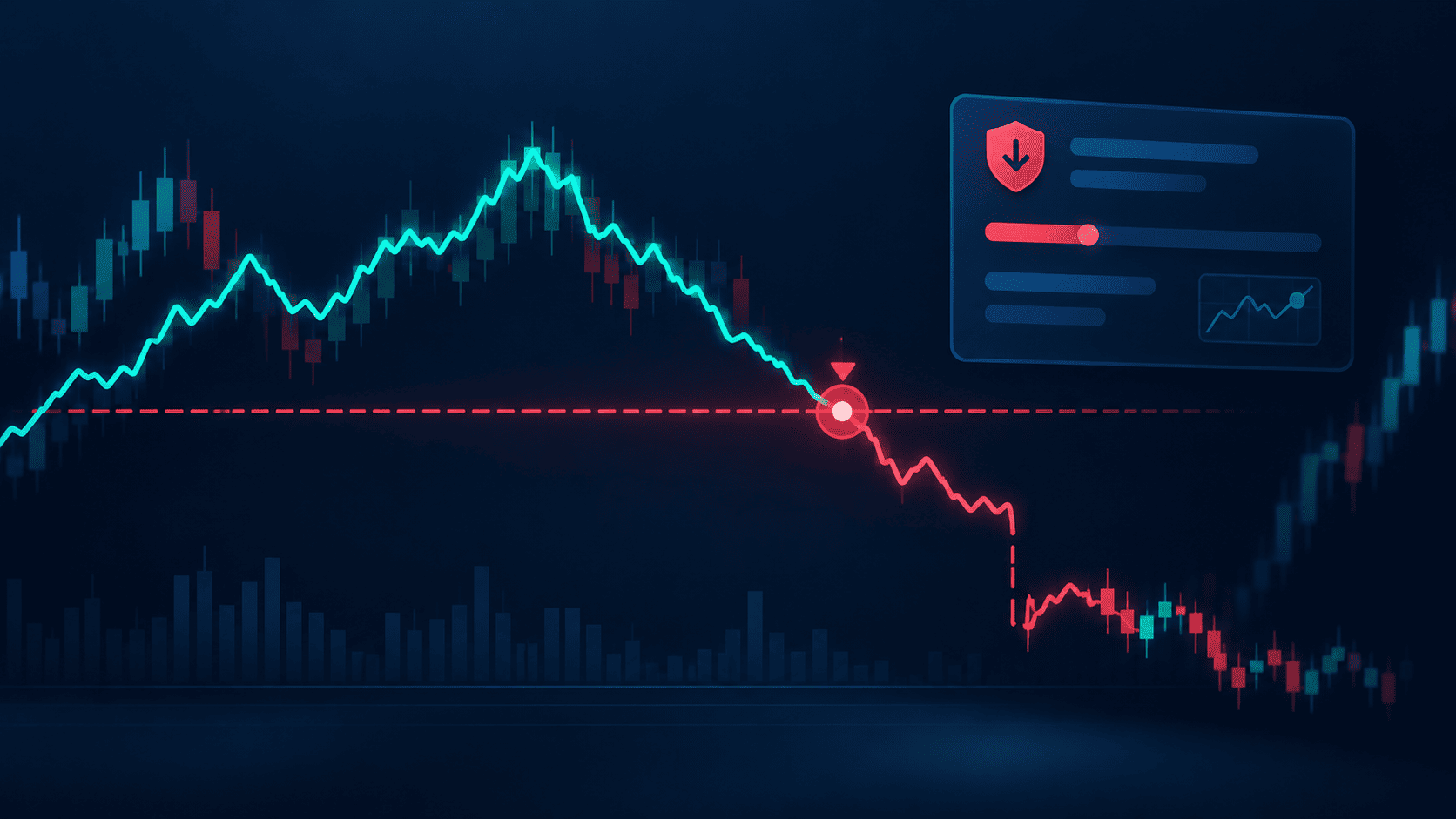
A stop loss is a type of order that calls for an exit when the price hits a given threshold. It can limit how long you stay in a losing trade, but it doesn't guarantee the exit price; the trigger and the fill may be different, particularly in a fast market.
There are several reasons that early stop-outs can occur; this guide covers placement, order type, sizing, and execution conditions.
Major Takeaways
A stop price is a price set that will signal the purchase or sale of a stock. The fill can go elsewhere, and a stop-limit might not fill.
Placement is based on where the trade idea fails or how far from that point the price will typically travel, not a certain distance.
The size of the position should be determined after the stop, since the distance to the stop determines the loss per unit.
A few stops do indeed pile up and cascade, but that doesn't mean anyone is targeting the individual stops.
What a Stop Loss Does
A stop loss order is a conditional order: If the market hits the stop price, the platform will trigger an order to close/reduce the position.
The next set of actions depends on the order type and the market.
The stop is a trigger, not the price you’ll get. The SEC’s guidance on stock orders draws the same line, and a standard risk disclosure for security futures warns that market conditions may make it impossible to execute the order or get the stop price.
These concepts are for stocks and futures, so check how your platform deals with them.
The steps to take for a successful position close are detailed in this guide to closing a position.
Stop-Market, Stop-Limit, and Trailing Stop Orders
When a stop-market order is triggered, it turns into a market order. It focuses on the exit, and the fill can go out of the stop in a rapid move, into a gap or thin liquidity.
A stop-limit turns into a limit order when it is activated. It can also be used to set the worst price that you're willing to take, and when the market hits that price, it can remain unfilled while the position continues to push against you.
A trailing stop loss accompanies the price in your favor, and remains there when the price reverses. It can be triggered during a standard pullback, and its fill will continue to be executed in the same condition.
The reference price also comes into play. Two stops at the same number can look different if they are set to trigger off the last traded price or off a quote or, for derivatives, mark or index price.
Also confirm platform rules before committing.
Where to Place a Stop Loss
The first question when considering stop loss placement is: where does this trade stop making sense?
Structure-based placement places the stop further away from the point that would contradict the idea, such as a long depending on a swing low. Support and resistance are zones, not lines, so allow the price to reach those zones but not exactly mark them out as the end of the trade.
Volatility-based placement is asking yourself: how much does the price usually fluctuate?
Introduced by J. Welles Wilder in 1978, average true range calculates the average of recent price ranges, including gaps; it is concerned with movement, not direction, and can be used to provide information on how much room a stop requires.
There are some errors grouped around positioning; a stop occurring inside an ordinary price movement gets hit by noise. A stop just beyond a round number sits where other stops tend to gather, at least in the currency order data Osler studied. And widening a stop after entry raises the planned loss per unit, unless the position size is cut to match. Spreads and fees can contribute to the exit in a way the stop distance isn't visible.
Sizing the Stop and the Position Together
Determine the stop, then the size. Position sizing is the amount you are willing to lose divided by the loss per unit, which is the distance from entry to stop.
If it's a contract, then enter the multiplier or tick value. Using arbitrary numbers: if you are willing to take a loss of 60, with a stop 3 units from entry, then the size is 20 units. This is an arithmetical example, not a trade suggestion.
The outcome is not a cap; it's planned risk. A stop-market may fill beyond the stop, a stop-limit may not fill, and the cost piles up. In margin positions, a larger move can also devour margin prior to exiting. If you change a stop point without changing the size, you've changed the risk.
Stop Hunting: Why Stops Get Triggered Early
Stop hunting is based on the premise that someone is trying to get through the other people’s orders deliberately.
Osler's currency studies determined that stops tend to bunch together around round numbers and accelerate when price hits them, as would be expected from triggered stops increasing the momentum of the price action. That's a mechanism and not an intention, derived from currency markets.
The simpler explanations can be sorted out first, such as the stop being placed in normal movement. FINRA states that stock orders can be triggered by a brief wick in thin liquidity, and doesn't “undo” the fill when it recovers.
Setting Stops on XXKK
The academy’s take profits and stop loss are covered in a separate piece. Before using any of them, verify the types of orders they offer, the price level that activates the order, and if the order is bound to an open position or is stand-alone. Those details change, and the markets you trade affect the amount the fill will move from the trigger.
Conclusion
A stop loss defines where you exit, not what you’ll get. The trigger isn’t the fill; a stop-limit may not fill, and costs add up.
Size is determined by the distance, and placement is determined by the place where the idea failed or how much the price normally moves.
Open an XXKK account and set a stop loss on your next position.
Read the order types guide on XXKK before you rely on a stop-limit.
Decide the stop before you decide the position size.
FAQs
What is a stop loss?
A conditional order that either closes or reduces a position when a certain price is reached.
What types of stop loss are there?
Stop-market, stop-limit, and trailing stop.
Where should you place a stop loss?
At the point where you would lose out on the trade, with room for the normal price movement, which average true range can assist you in measuring.
What is a trailing stop loss?
A stop whose trigger follows price in your favor and stays fixed when price reverses.
