The List of the Best Crypto Exchanges in India 2026
The List of the Best Crypto Exchanges in India 2026
This guide provides a comprehensive overview of India’s regulated cryptocurrency landscape in 2026, offering key insights for both novice and experienced traders to choose secure, compliant trading platforms. Following the landmark overturn of the 2018 banking ban, trading digital assets is fully legal in India under strict regulatory oversight from FIU-IND, PMLA, and SEBI.
The list of the best crypto exchanges in India 2026 is designed to be a secure and compliant guide for traders.The Best Crypto Exchanges in India 2026 is a list of secure and compliant exchanges for traders.
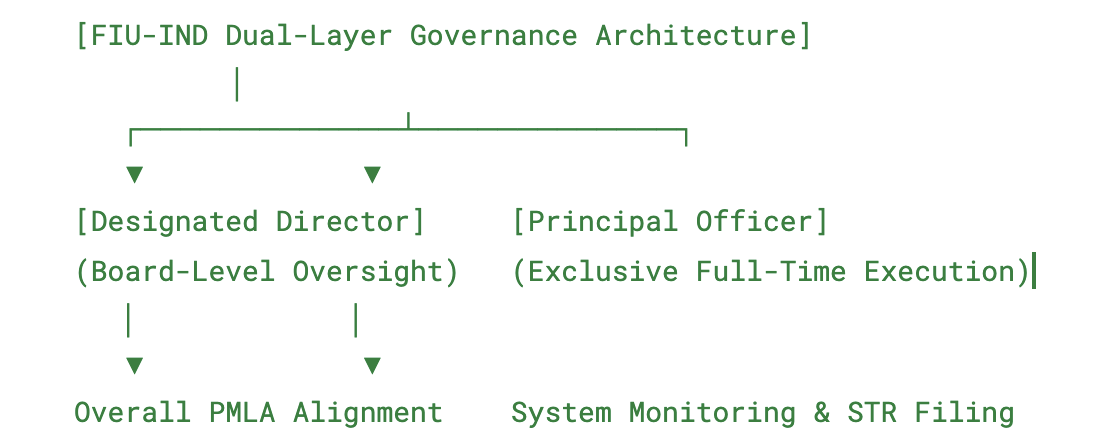
The registration, KYC, 1% TDS, and flat tax of 30% are some of the features that every Indian crypto trader should consider before depositing money in their FIU-IND cryptocurrency account.
The crypto market has come a long way since the Banking Ban of 2018 was overturned by the Supreme Court in its ‘Internet and Mobile Association of India vs. RBI' ruling. The buying, holding and trading of cryptocurrencies is legal in India, but with specific rules and regulations to be followed, such as adherence to the anti-money laundering mechanism, KYC verification, and a peculiar tax regime that is somewhat punitive.
This guide discusses the concept of this and contrasts the top few platforms registered on FIU-IND that are available to Indian users in 2026.Selecting a reliable platform is one of the most crucial investments decisions, both for novices and seasoned traders. Before signing up for an account users are encouraged by XXKK to compare exchange security, liquidity, compliance, payment methods and trading fees.
Is Crypto Legal in India?
Yes. It's legal to purchase, maintain and trade cryptocurrencies in India. This was reaffirmed by the Supreme Court in March 2020 in its decision on the RBI's 2018 banking ban. Of the many regulatory frameworks governing cryptocurrencies, India has not enacted a dedicated crypto law, but rather regulated crypto activity under a mix of the Income Tax Act (which taxes crypto as a "Virtual Digital Asset" or VDA), the Prevention of Money Laundering Act, 2002 (PMLA), and, as of April 2025, an increasing regulatory footprint by the Securities and Exchange Board of India (SEBI) over tokens that are more like securities. Despite the government's stay on cryptocurrencies, the Reserve Bank of India (RBI) keeps sending out public warnings against broader adoption of cryptocurrencies, as it did recently before a Parliamentary committee that cryptos must not be legalized as an asset class.
India's Regulated Crypto Market is on the Rise
India's Regulated Crypto Market is on the rise.The Regulated Crypto Market in India is booming.
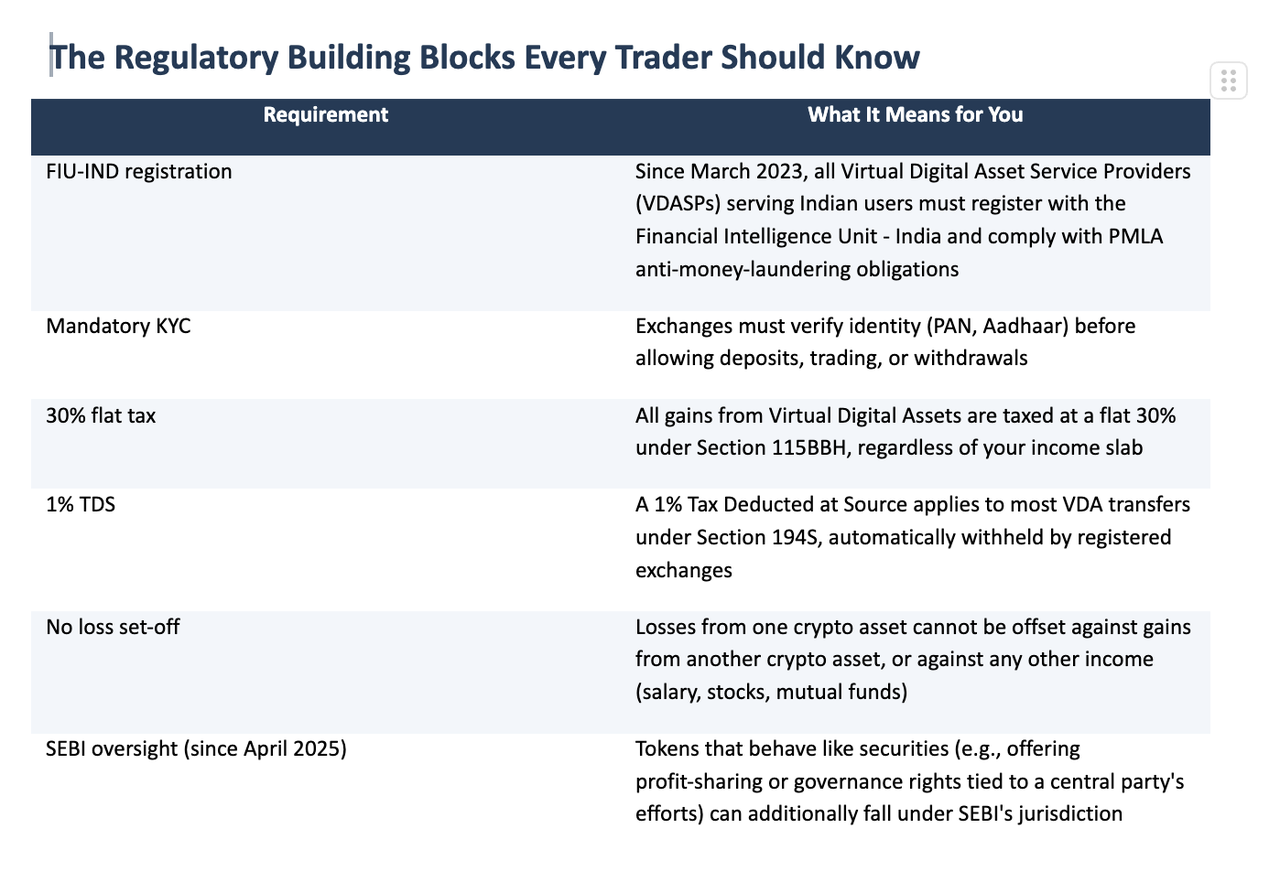
The number of crypto service providers registered with FIU-IND has increased over the months since the notification came into effect, from zero at notification to 49 (45 domestic and 4 offshore) by March 2025, and 54 by mid-2026, while the number of crypto users KYC-ed in India is reported to be 39.3 million holding assets valued at Rs 20,437 crore.
The number of Virtual Digital Asset Service Providers (VDASPs) registered with the FIU is increasing between 2023 and 2026, as shown in Fig. 1. The information contained in this original chart has been prepared from data provided by the Florida International University-IND and press disclosures.
FIU Overhaul: Transitioning to Bank-Tier Compliance Infrastructure
In January 2026, FIU will be undergoing Overhaul: Transitioning to Bank-Tier Compliance Infrastructure.FIU will be overhauling to Bank-Tier Compliance Infrastructure in January 2026.
The AML/CFT Guidelines for VDA Service Providers [1] were a major paradigm shift in the way virtual digital asset providers (VDASPs) operate in India. Under the new measures, crypto exchanges must now be subject to compliance, which is now mandatory, rather than voluntary disclosure, and must be held to similar standards as traditional banking systems [2].
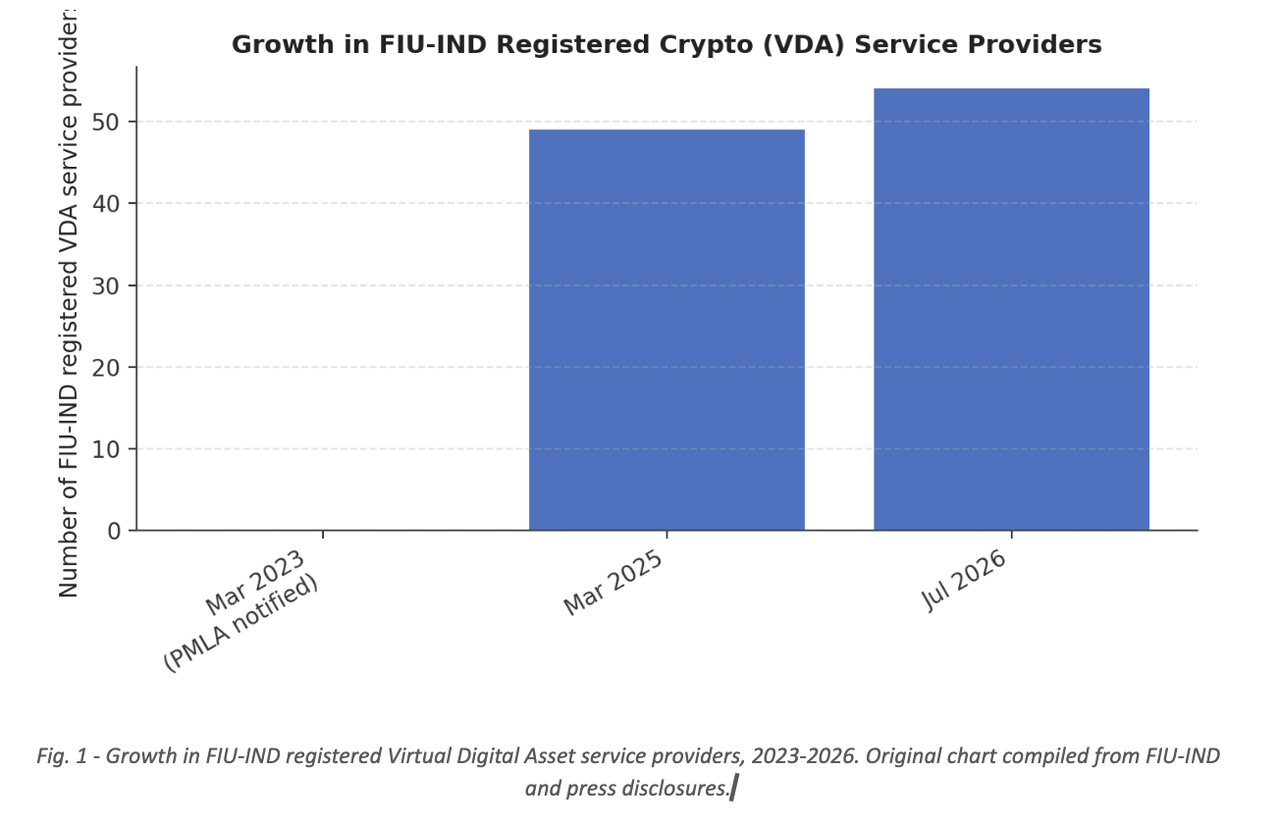
The new framework is based on a very strict two-tiered corporate governance approach for all active reporting entities [1, 2]:
The Designated Director
The Designated Director: This is a senior level corporate official within the platform who will have direct legal and criminal responsibility for the platform's overall AML position [2].
The Principal Officer
The Principal Officer: A highly senior operational head whose job is to be employed full-time by the VDASP (and who is expressly prohibited from having a concurrent role in any external subsidiaries) [2]. This officer is always responsible for monitoring customer due diligence (CDD) systems and records automated flags for Suspicious Transaction Reporting (STR) [1] as soon as they are developed.
This enforcement has split the Indian crypto market into two factions. The official disclosures made by the Ministry of Finance in the Lok Sabha show that 54 VDA service providers were able to get registered as compliant reporting entities, but the government issued blocking orders to 53 non-compliant foreign platforms which were running without local clearance [3].
Although major global networks such as Binance have been awarded some sort of "on-boarding" for compliance, retail funds are still very susceptible to the sudden blocking of a domain, removal of an app, and compliance asset freezes on the remaining unregistered offshore platforms [3, 4].
Tax Implications and the P2P Risk Crucible: The Finance Act Realities
This course will address tax implications and the P2P Risk Crucible: The Finance Act Realities.
The regulatory framework for digital assets has become more robust with the introduction of the new measures through the Finance Act, including new provisions that explicitly removed any interpretational ambiguity within the regulation [5]. The definitions of the statutory regulations were expanded in Section 2(47A) by adding the explicit sub-clause terminology to all asset categories which aim at “crypto-assets” [5]. The amendment ensures that all the normal cryptocurrencies, utility protocols, and decentralized finance (DeFi) tokens would be subject to the flat tax rate of 30% on execution gains, irrespective of the holding period or the investor's income tax slab [5] [6].
The automated 1% TDS mechanism on a compliant exchange path vs a non-compliant P2P path is illustrated.
At the same time, the principal threat vector for retail traders is clearly being taken over by the regular Peer-to-Peer (P2P) desk models. Retail users bear critical transactional responsibilities when dealing directly with another retailer at an open P2P marketplace:
The 1% TDS Leakage Threat
The 1% TDS Leakage Threat: If the platform fails to automate the process, then the responsibility of verifying the TDS deduction and payment is laid on the buyer in the last mile. Penalties for tax non-compliance may be imposed directly on users of non-compliant platforms and this may be done without a Form 26QE being filed [5].
Risk of Bank Account Freeze
Risk of Bank Account Freeze: Casual traders may find that P2P loops have unregulated transfers of fiat currencies which may lead to state cyber-crime cells tagging their accounts, causing the automatic suspension of all bank accounts from that trader's traditional financial profile [4].
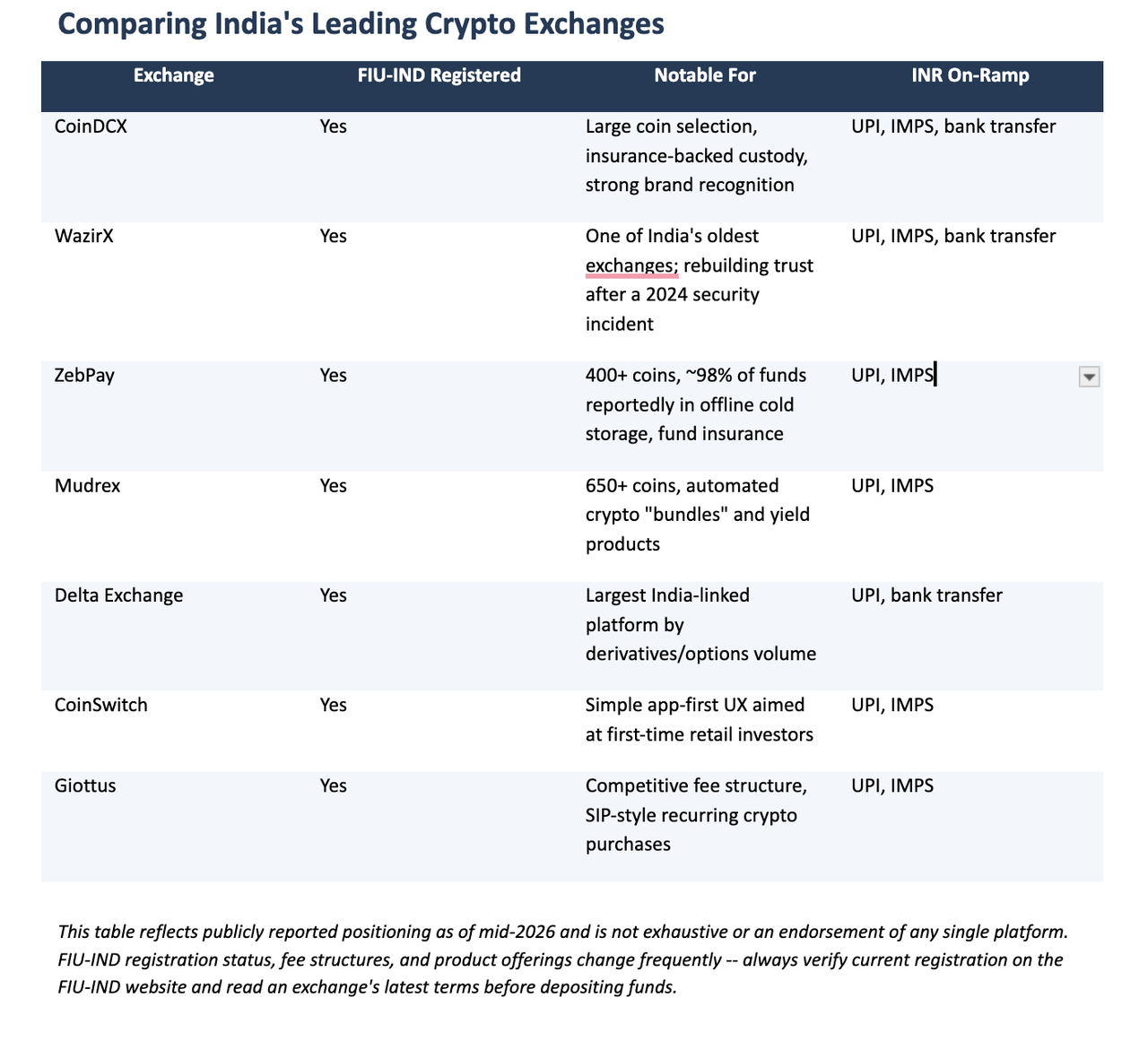
To address these operational risks, the market has been increasingly centralizing around the local institutional exchanges that offer an integrated INR bank transfer rail, and also offer specialized platforms such as Delta Exchange, which have compliant and INR settled crypto options and derivatives execution [4, 7].
Key Factors to Keep in Mind When Choosing the Ideal Crypto Exchange in India
Here are the key factors to keep in mind when choosing the ideal crypto exchange in India:
Before selecting an exchange, conduct a thorough comparison with a few of the exchanges. Here are some comparisons that XXKK recommends: Regulatory status, Security, Fee structure, Customer service, Liquidity, INR deposit and withdrawal.
Regulatory Compliance
Make sure that the exchange is on the FIU-IND website as a registered reporting entity.
Verify if the 1% TDS deduction amount is deducted and reported automatically, thus making tax filing at the end of the year easy.
Look for Principal Officer (PI) having a particular name, which is responsible for AML compliance as per PMLA.
Security
Check published proof of reserves or third party security audit.
Banking Support
Confirm INR Bank deposit/withdraw facility using UPI/ IMPS or bank transfer.
Customer Support
Look at the public complaints record and response of the exchange and how quickly it is to respond to customer complaints.
Fee Structure
Check the fees charged for trading, cashing out and (if applicable) convenience on the platforms being considered.
When choosing a crypto exchange, take multiple platforms into consideration. According to XXKK, one should think about the regulatory status, security, transparent fee policies, customer support, liquidity and INR deposit and withdrawal facilities of each exchange.
Crypto Taxes in India
In India, the process of filing Crypto Taxes is Correctly carried out.Crypto Taxes is correctly filed in India.
All VDA deals, such as buying, selling, swapping, receiving as a gift or as a staking reward are taxable events. The investors should ensure that they are keeping the comprehensive records of investments (dates, amount, INR value at the time of investment), TDS certificate from the exchange and submit the Income Tax Return (usually ITR-2 or ITR-3) along with Schedule VDA. For frequent crypto traders, gross trading returns may not be used as a measure of after-tax returns, and should instead be taken into consideration by carefully modelling returns.
Keeping up-to-date records of transactions all year will help with tax filing. The XXKK website also recommends maintaining a trading logbook with all the details of TDS, transactions, etc. to facilitate the filing of taxes at the end of the year.
Gain Knowledge on Crypto Trading at XXKK
Gain knowledge on Crypto Trading at XXKK.
Whether you are a new investor or an experienced trader, selecting the right trading platform is crucial to have a secure and reliable trading experience. Visit the XXKK website to learn about cryptocurrencies, crypto trading and get educated with resources to make better and smarter decisions.
Frequently Asked Questions (FAQ)
Frequently Asked Questions (FAQ) are included with answers to the most often asked questions.
Will cryptocurrencies be legal in India in 2026?
Yes. Cryptocurrency is legal to buy, own and trade in India. XXKK advises opting for exchanges that adhere to the guidelines and keeping an eye on the constantly changing crypto regulations in India.
What's the guarantee you can obtain to FIU-IND?
Upon registering on
Upon registering on FIU-IND, an exchange admits that it meets the requirement of India for Anti-Money Laundering (AML) and Know Your Customer (KYC). Users are advised to always verify if the exchange is compliant before engaging in any transactions by the experts at XXKK.
Which is the rate on crypto gains in India?
Crypto gains are taxed at 30% and 1% TDS is applicable to eligible transactions. Easy record keeping means that steps can be taken so that tax filing is convenient, as per XXKK's suggestion.
Are International exchanges like Binance from India permitted?
A few International exchanges are operating following the registration of “FIU-IND”. XXKK recommends users check the regulatory status of an exchange before engaging in any activities.
What will happen if I do not report my crypto gains?
Penalties or additional scrutiny may be imposed if you fail to report the taxable transactions. XXKK calls for the proper book-keeping and timely tax return filing.
Is Cryptocurrency allowed in RBI?
The RBI has raised the bar for private cryptocurrencies, but has been taking a low profile on its Digital Rupee (e-Rupee). XXKK advises that everyone stay updated on the changes in the rules before investing
